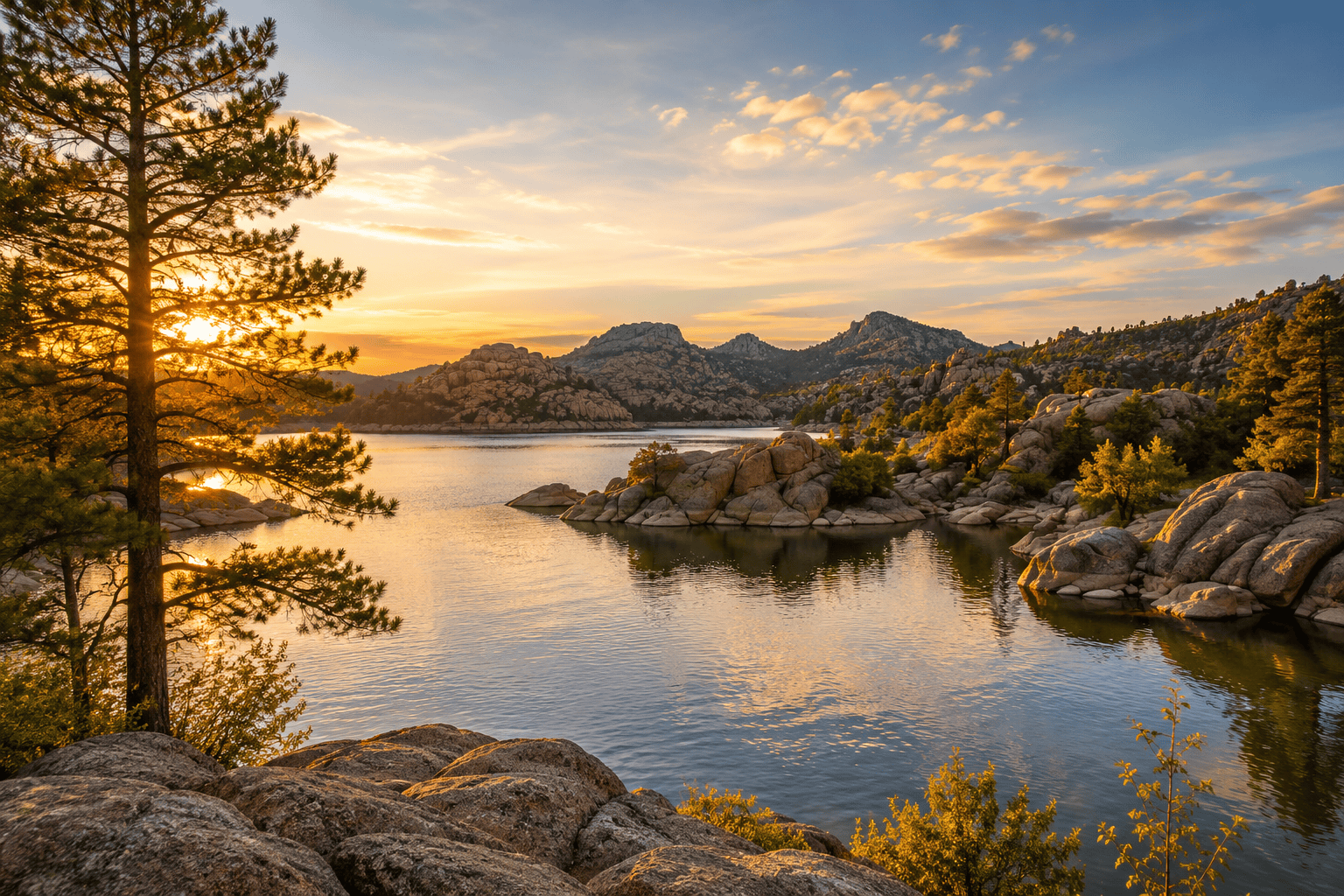
Most people do not picture lakes when they think of Arizona, which is exactly why Prescott surprises them. Tucked into the pines and granite at a mile high, the town has four lakes within a short drive of downtown, each with its own character. One is a maze of giant boulders made for paddling, another is a quiet pine-ringed spot for fishing, and all of them give you cool water and mountain scenery that feel a world away from the desert below. This is our guide to the Prescott lakes, what makes each one worth your time, and how to make the most of a day on the water.
Quick Facts: The Prescott Lakes
| Best for | Kayaking, fishing, easy hiking, photography, picnics |
| Cost | Free to visit; small daily parking fee at Watson and Willow |
| Dogs | Yes, leashed; pack water for them |
| Best time | Early morning, spring through fall (fall for color) |
| Distance from downtown | About 10 to 15 minutes to each lake |
| Insider tip | Paddle Watson Lake at sunrise for glassy water and the boulders to yourself |
The Granite Dells, the landscape that ties it together
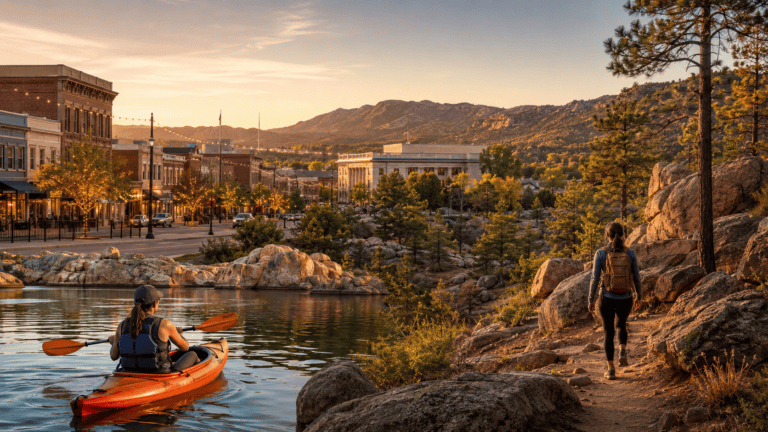
Before the individual lakes, it helps to understand the Granite Dells, because they are the reason two of Prescott’s lakes look like nowhere else in the state. The Dells are a vast jumble of ancient granite, worn over roughly a billion years into rounded, piled boulders and knobs that stretch across the north side of town. When the dams went in and created Watson and Willow Lakes in the early 1900s, the water pooled among those boulders, so today you can paddle right up to and between rock formations that rise straight out of the lake. The effect is otherworldly, and it is what makes a Prescott lake day feel less like a trip to a reservoir and more like exploring a natural sculpture garden. Keep that in mind as you pick a lake, because the Dells are the common thread.
The dams that made the lakes
It is worth knowing that Prescott’s lakes are not natural. They exist because a growing town needed to store water. In the early 1900s, dams were built across the drainages in the Granite Dells to hold back Granite Creek and its neighbors, and the reservoirs that formed became Watson and Willow Lakes. What began as practical waterworks turned into two of the most scenic spots in the region, almost by accident, as the water filled in among the ancient boulders. Lynx and Goldwater Lakes came about the same way, as reservoirs in the pines south of town. So when you paddle these lakes, you are floating on a piece of Prescott’s history, the same drive to secure water and resources that shaped the whole town, which we cover in our history of Prescott.
Watson Lake
Watson Lake is the star, and the reason is those Granite Dells. Paddling a kayak out among the boulders is one of the most memorable things you can do in the area, and it is the most photographed spot in Prescott for good reason. Beyond paddling, you can fish from the shore or a boat, walk the roughly five-mile loop trail that circles the water and threads through the rocks, or ride the flat Peavine Trail along its edge. There is a campground open spring through fall, a disc golf course along the shore, and a small daily parking fee, usually a few dollars. One thing to check before you go: the rules about what is allowed in the water at Watson change from time to time, so read the signage at the lot for the current word on swimming and boating.
Insider Tip: Get to the Watson Lake lot before about 8 a.m. on summer weekends. It fills fast, the light on the Dells is best early, and the water is at its calmest before the afternoon breeze picks up.
Willow Lake
Just to the west, Willow Lake offers the same Granite Dells scenery in a quieter, more spread-out setting. It tends to be calmer and less crowded than Watson, which makes it a favorite for people who want the boulders and the water without the bustle. The Constellation Trails wind through the rocks along its edge in a network of short, easy loops, and the area is a well-known spot for birdwatching, especially near the shoreline where herons and other water birds gather. The Heritage Park Zoological Sanctuary sits nearby, so a morning at Willow Lake pairs naturally with an afternoon meeting the rescued bears and mountain lions next door. Willow is the lake to choose when you want a peaceful walk and a good view rather than a busy day out.
Lynx Lake
South of town, Lynx Lake trades granite for tall ponderosa pines, and the change of scenery is striking. Ringed by forest, it feels like a classic mountain lake, calm and shaded and cool even on warm days. It is a favorite for fishing, with rainbow trout stocked through the cooler months, and for an easy paddle in a canoe or kayak. A lakeside cafe near the water makes it easy to turn a visit into a lazy half-day, and the surrounding forest puts on some of the best fall color in the area come October. There is history here too. The gold that first drew settlers to this part of Arizona in 1863 was found along Lynx Creek, which feeds the lake, and people still pan the creek for flakes today.
Goldwater Lake
Goldwater Lake is the local family favorite, a pair of connected lakes in the pines just south of town. It is an easygoing place built for low-key afternoons, with picnic ramadas, gentle shoreline paths, and calm water for small boats, canoes, and kayaks. Gas motors are not allowed, which keeps it quiet and clean, so the loudest thing you are likely to hear is a kid reeling in a fish. If your idea of a good day at the lake is a picnic, a paddle, and a slow walk along the shore, Goldwater is the one.
Which lake is right for you
With four to choose from, it helps to match the lake to your mood. If you want the wow factor and the classic Prescott paddle through the boulders, go to Watson Lake, and go early before the lot fills. If you want that same Granite Dells scenery but quieter, with an easy walk and good birdwatching, choose Willow. If you are after a shaded, pine-ringed spot to fish or take a gentle loop, especially on a hot day or in the fall, Lynx Lake is the pick. And if you are bringing little kids and just want a mellow picnic-and-paddle afternoon with no crowds and no fuss, Goldwater is made for exactly that. You really cannot go wrong, but knowing what each does best saves you from guessing.
Getting on the water: renting and launching
You do not need to own a boat to enjoy these lakes. In the warmer months, kayak and paddleboard rentals are available at Watson Lake, so you can show up empty-handed and still spend the morning gliding through the Dells. If you bring your own kayak, canoe, or paddleboard, Watson, Willow, Lynx, and Goldwater all have launch points, though the smaller lakes are geared toward paddle craft and small boats rather than anything with a big motor. Goldwater bans gas motors entirely, and the others favor a calm, low-speed pace, which is part of why the paddling here is so pleasant. If you are new to paddling, Goldwater and the calmer coves of Willow are the gentlest places to get your bearings before you tackle the maze of boulders at Watson.
Fishing the Prescott lakes
All four lakes are popular with anglers, and each fishes a little differently. Lynx Lake is the local favorite for trout, stocked with rainbows through the cooler months, while Watson and Willow hold warm-water species like bass, catfish, sunfish, and crappie. Goldwater rounds things out with a mix that makes it a nice, low-key spot to teach a kid to cast. Whatever you are after, you will need a valid Arizona fishing license, which is quick to buy online from the Arizona Game and Fish Department before you go. Early morning and evening are the best times, and from a kayak you can reach quiet water that shore anglers cannot, which is one more argument for getting out on a paddle craft.
Wildlife around the water
The lakes are among the best places near Prescott to see wildlife, especially birds. Great blue herons stalk the shallows, ducks and other waterfowl gather on the water, and ospreys and even bald eagles turn up around Watson and Willow in the cooler months, drawn by the fish. The reedy edges of Willow Lake in particular are a birdwatcher’s favorite. Away from the water, you may spot mule deer in the early morning and, less often, javelina moving through the brush. Bring binoculars if you have them, keep your distance from any animal, and remember that the quieter you are, especially on a morning paddle, the more you tend to see.
Photographing the Granite Dells
If you like taking pictures, the lakes will keep you busy. The Granite Dells around Watson and Willow are at their best in the soft light of early morning and late evening, when the low sun turns the granite warm and the still water throws a mirror reflection of the boulders. Sunrise at Watson Lake, with mist on the water and the rocks glowing, is one of the most rewarding shots in the region, and you will often have the place to yourself. A paddle gets you angles no one on shore can reach. Even a phone camera does well here, so you do not need fancy gear, just decent light and a little patience.
Camping and picnicking by the water
If one day is not enough, Watson Lake has a campground that operates spring through fall, letting you wake up right in the Granite Dells and catch the early light on the boulders, which is when the lake is at its most magical and least crowded. For day trips, every lake has good picnicking, with ramadas and tables at Goldwater and Lynx and plenty of flat rock and shoreline to spread out on at Watson and Willow. Pack a lunch, claim a spot with a view, and you have the makings of an easy, cheap, genuinely beautiful day out. The Lynx Lake cafe is there too if you would rather someone else handle the food.
Getting to the lakes
Part of what makes the Prescott lakes so easy to enjoy is how close they are. All four sit within about a ten- to fifteen-minute drive of downtown, so you can decide on a whim and be on the water before you would have finished the drive to a lake almost anywhere else in Arizona. Watson and Willow are just north of town and practically neighbors, which is why people often visit both in one outing. Lynx and Goldwater are tucked into the pines a short way to the south. You will want a car to reach any of them, since they are spread around the edges of town rather than in the center, and a little cash for the parking fee at Watson and Willow. Beyond that, there is no trick to it. Point the car, drive a few minutes, and you are there.
When to go
Each season shows the lakes off differently. Spring and early summer are ideal for paddling and fishing, with mild temperatures and long days. Summer afternoons can bring quick monsoon storms in July and August, so morning is the smart time to be on the water. Fall is arguably the best of all, when the crowds thin and the trees around Lynx Lake and the creeks turn gold and red. Winter is quiet and cold, and while you probably will not be paddling, the Dells around Watson and Willow are beautiful with a dusting of snow and make for a peaceful cold-weather walk, and it is prime time to spot eagles.
A few practical tips
A little planning makes a lake day smoother. Keep a few dollars in the car for the daily parking fee at Watson and Willow. Arrive early on summer weekends, since the popular lots fill up and the best light for photos is in the morning anyway. Read the posted signs about swimming and water use, which vary by lake and can change season to season. Bring more water and sunscreen than you think you need, because the high-country sun is stronger than it feels. And if you bring your dog, keep it leashed and pack water for it too, since Prescott is dog-friendly but the trails get warm.
Making a day of it
The beauty of the Prescott lakes is how close together they are, so you can easily string two or three into a single outing. Paddle the Dells at Watson in the morning, picnic at Goldwater in the afternoon, or walk the quiet Constellation Trails at Willow and finish with a coffee at the Lynx Lake cafe. Many of the easy trails in our guide to beginner-friendly hikes in Prescott start right at these lakes, and you will find more ideas in our things to do in Prescott guide. For seasonal conditions, fishing updates, and local tips through the year, join our free newsletter.