Just east of Prescott, over a low pass and down into a wide basin, sits the biggest and fastest-growing town in the whole region: Prescott Valley. Where Prescott is all historic downtown and pine-covered hills, Prescott Valley is newer, more spread out, and more practical, the place locals actually go to shop, catch a concert, or find an affordable home. It has an unlikely backstory too, having gone from an empty stretch of ranch land called Lonesome Valley to a town of nearly fifty thousand people in a single lifetime. This is our guide to Prescott Valley, Arizona, how it came to be, and what there is to do once you are there.
Where Prescott Valley is
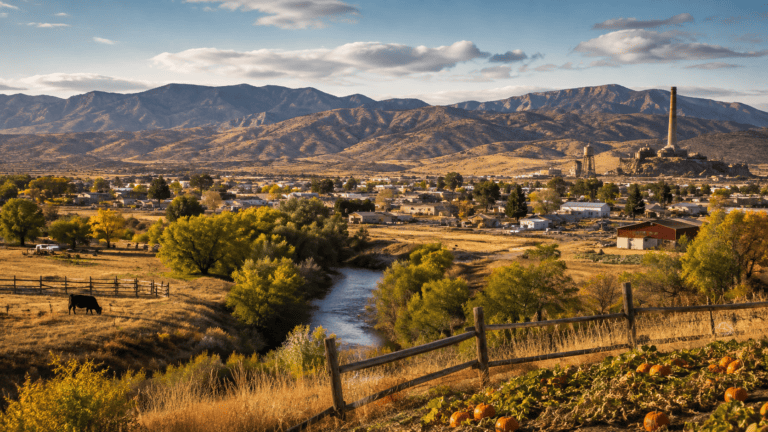
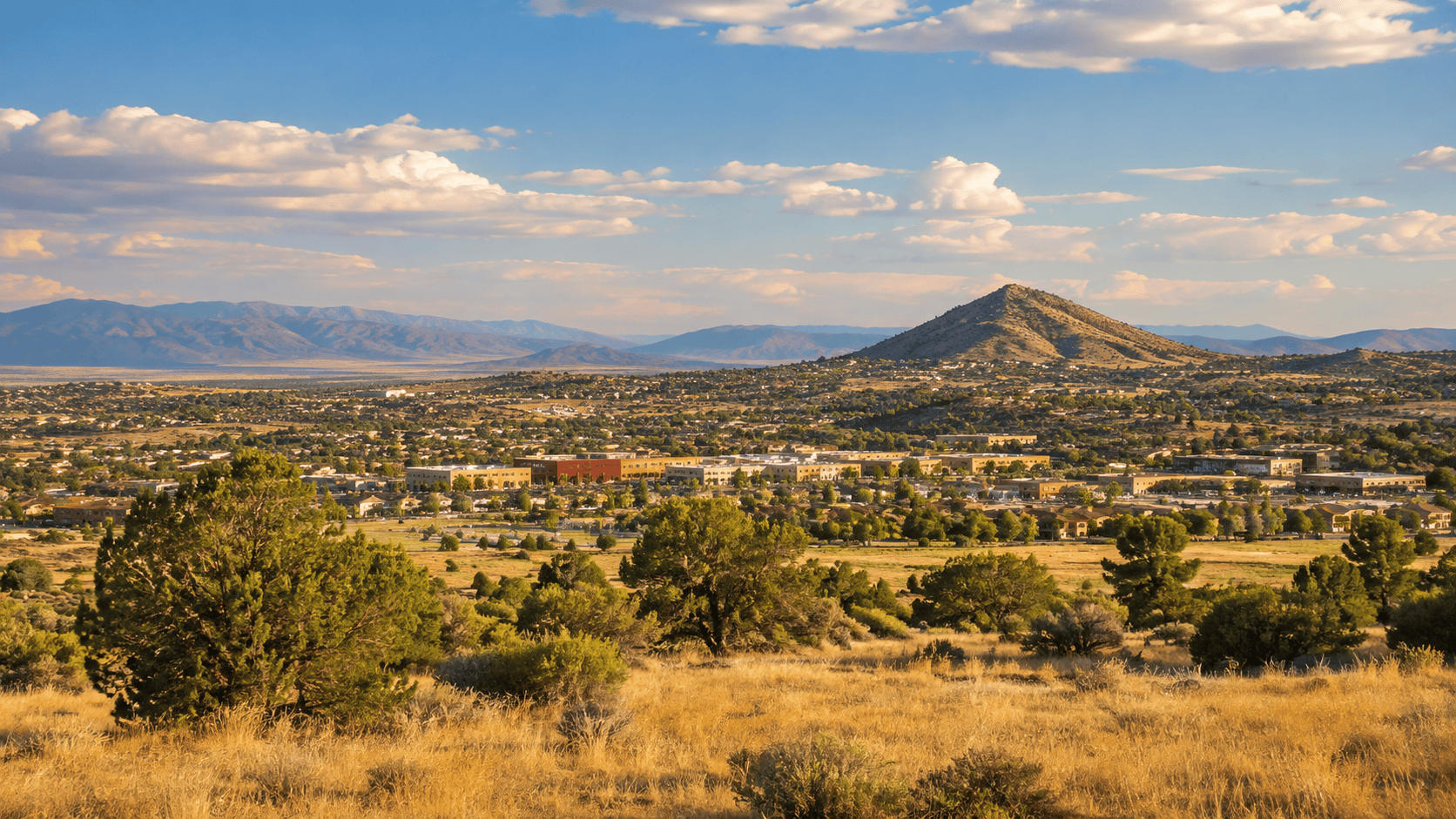
Prescott Valley sits about ten miles east of Prescott along Highway 69, in a broad open basin at roughly a mile high. The drive over from Prescott takes only fifteen minutes or so, which is why the two towns function as next-door neighbors despite their very different personalities. The landscape here is more open and high-desert than forested, with the distinctive cone of Glassford Hill rising over the town and mountains ringing the valley. It is the commercial and residential heart of the area, the place where a lot of the region’s everyday life happens.
From Lonesome Valley to a boomtown
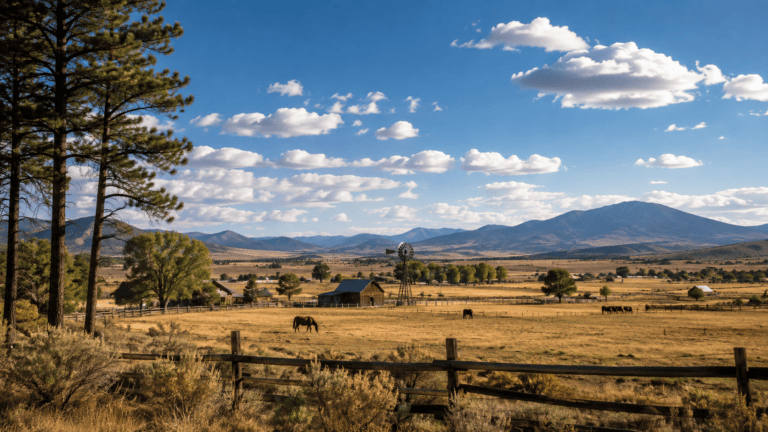
For most of its history, this basin had a fitting name: Lonesome Valley. The story goes that a Fort Whipple soldier described the empty country between Fort Whipple and Fort Verde by saying there was hardly a soul in that lonesome land, and the name stuck for nearly a hundred years. Ranchers settled here in the 1880s, raising beef to feed the miners and settlers over in Prescott, and the pioneer Fain family, whose descendants still ranch in the area, became central to the valley’s story. For decades it stayed exactly what its name suggested: quiet, open ranch country with very few people.
The Fain family and the Castle
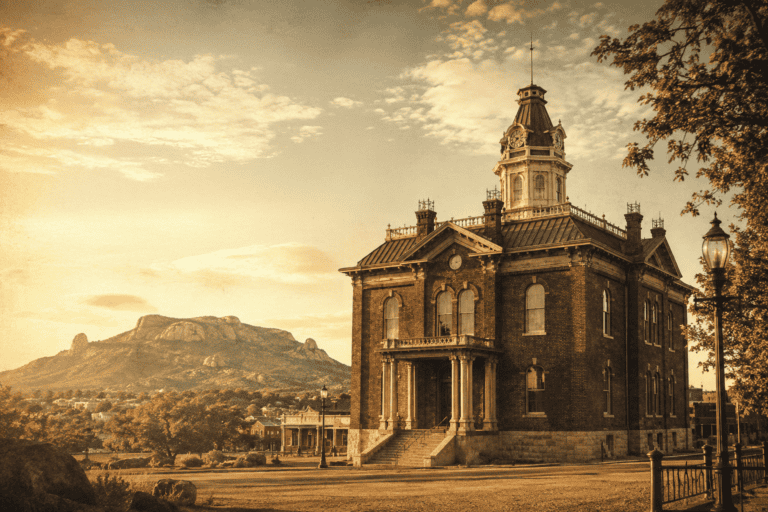
One of the more colorful early chapters belongs to Thomas Gibson Barlow-Massicks, an Englishman who arrived around 1890 and built a Victorian mansion locals still call the Castle. He set up a small settlement with a general store and post office, and he dredged Lynx Creek for gold, leaving behind mining equipment that can still be seen today. The Castle survives on the edge of Fain Park and is one of the few original structures left from that era, a reminder that even Lonesome Valley had its dreamers and its brush with the gold that built the whole region.
A planned town that grew up fast
Prescott Valley as we know it is surprisingly young. In the mid-1960s, a Phoenix real-estate company called Prescott Valley Incorporated bought up a large stretch of Lonesome Valley about ten miles east of Prescott and set out to build a planned community from scratch. The town incorporated in 1978, and from there it grew, and grew, and kept growing. Unlike the historic towns nearby, Prescott Valley was essentially designed and built in the modern era, which is why it feels newer and more suburban, with subdivisions, shopping centers, and wide roads rather than a century-old main street.
The fastest-growing town in the region
That growth never really stopped. Today Prescott Valley is the largest municipality in the immediate area, home to somewhere around forty-seven thousand people, having quietly grown larger than Prescott itself. It has become the retail, dining, and entertainment hub of the Quad Cities, the place people from all the surrounding towns come to for big-box stores, chain restaurants, movie theaters, and events. If Prescott is where you go for history and charm, Prescott Valley is where you go to actually get things done, and that practical role is a big part of its identity.
Why people keep moving here
It is worth asking what has fueled all that growth, because the answer says a lot about the town. Prescott Valley offers much of what draws people to the Prescott area, the mile-high climate, the four real seasons, the mountain scenery, and the small-city pace, but usually at a lower price than historic Prescott, with newer homes and more of them. Families are a big part of the story, drawn by the space, the parks, the schools, and the sense that you can still get a yard and a view without a big-city budget. Retirees and remote workers have found the same appeal. The result is a steady stream of newcomers from Phoenix and beyond who want the high country without the historic-town price tag, and a town that keeps building to make room for them.
Climbing Glassford Hill
The landmark that defines the town is Glassford Hill, an extinct volcano rising to 6,177 feet right at the edge of Prescott Valley. It carries a genuinely interesting history. In the 1880s, Colonel William A. Glassford helped build a network of twenty-seven heliograph stations across Arizona, a system that flashed messages in Morse code using mirrors and sunlight to track the movements of Apache bands, soldiers, and settlers. Glassford Hill was part of that early communication web, and a remnant of the heliograph station still sits at the summit. The Glassford Summit Trail is a steep climb, but the payoff is a 360-degree view over the whole valley and the mountains beyond, making it the signature hike in town.
Fain Park
Fain Park, named for the pioneer ranching family, is the town’s beloved free outdoor space and its most historic spot. Tucked off North 5th Street, it wraps trails around a small lake and the creeks that run through the grounds, with picnic tables, shady spots, and good fishing. It is also where you will find the old Castle and the leftover mining equipment from the Lynx Creek gold days, so a walk here doubles as a walk through the valley’s history. Locals especially love it in spring and fall, and it is an easy, pleasant place to spend an unhurried afternoon.
Ancient history in the valley
Prescott Valley’s story runs far deeper than its ranching days. The Fitzmaurice Ruins in the area preserve traces of the early Mountain Patayan people, whose presence in this country goes back thousands of years. Long before soldiers, ranchers, or real-estate companies, Native peoples lived across this high country, and sites like these are a reminder that the valley has been home to human communities for a very long time. It adds a layer of depth to a town most people assume is brand new.
The Findlay Toyota Center
If Prescott Valley has a marquee attraction, it is the Findlay Toyota Center, a multipurpose arena seating around 5,100 people that anchors the town’s entertainment scene. Over the years it has hosted concerts, professional bull riding, family shows, and a rotating cast of home teams, from the Arizona Sundogs minor-league hockey team, which won a championship in 2008, to today’s Northern Arizona Wranglers indoor football team, who won their league’s national championship in 2022. It is the biggest indoor event venue in the region, so if a touring show or a big event comes to the Prescott area, there is a good chance it lands here.
Trails: the Peavine and Iron King
Prescott Valley plugs right into the region’s best rail-trail network. The Iron King Trail runs through town and connects to the Peavine Trail, which winds down through the Granite Dells to Watson Lake in Prescott. Together they form long, flat, easy paths ideal for walking, running, and biking, linking Prescott Valley to its neighbors on foot or by bike. It is a great way to see the open country between the towns, and it ties into the same trail system you will find in our guide to beginner-friendly hikes in Prescott.
Golf and getting outside
Beyond the rail-trails, Prescott Valley gives you plenty of ways to spend a day outdoors. The StoneRidge Golf Club offers a scenic mountain course at around 5,200 feet, where the thin air sends the ball a little farther and the views stretch across the valley. The town also sits within easy reach of the region’s lakes and forest, with Lynx Lake and the pines just up the road toward Prescott and open high desert all around. Add the many neighborhood parks and the climb up Glassford Hill, and there is no shortage of fresh air to be had. For a town best known for its shopping, Prescott Valley holds up surprisingly well for anyone who would rather be outside.
Shopping, dining, and the entertainment district
This is where Prescott Valley truly earns its keep for locals. The town is the region’s retail center, with a marketplace of big-box stores, a movie theater, and a wide spread of restaurants clustered around the developing Town Center and entertainment district near Glassford Hill Road. You will also find the long-running Peddler’s Pass flea market out on Highway 69, a favorite for secondhand treasure hunting. It is not the quaint, walkable downtown that Prescott offers, but it is where the region does its everyday shopping and dining, with far more variety than the smaller towns nearby.
Parks and family fun
For families, Prescott Valley is loaded with practical, kid-friendly options. Beyond Fain Park, the town maintains a whole system of neighborhood parks with playgrounds, ballfields, and open space, plus a seasonal aquatic center for hot summer days. Because so much of the town was planned and built recently, these amenities tend to be modern and well kept. It all reflects Prescott Valley’s role as the family and residential heart of the area, a place built for everyday living rather than tourism.
A downtown still taking shape
One of the interesting things about a young, planned town is watching it try to build the kind of downtown that older towns simply inherited. Prescott Valley has been steadily developing a walkable Town Center around the Findlay Toyota Center, with shops, restaurants, apartments, and public spaces meant to give the town a real heart. It is a work in progress, and it is fascinating to see a community deliberately create the sort of gathering place that Prescott’s courthouse plaza has had for over a century. Give it another decade and the difference could be striking.
Where Prescott Valley fits with Prescott
Prescott Valley is one of the four communities locals call the Quad Cities, alongside Prescott, Chino Valley, and Dewey-Humboldt. Its role is clear: it is the practical, commercial, and residential complement to Prescott’s historic charm. Visitors often stay or shop in Prescott Valley and spend their days in Prescott, and locals cross between the two constantly. Understanding the region means understanding that these are not rivals but partners, one supplying the history and the tourist draw, the other supplying the homes, the stores, and the arena.
A base for exploring the region
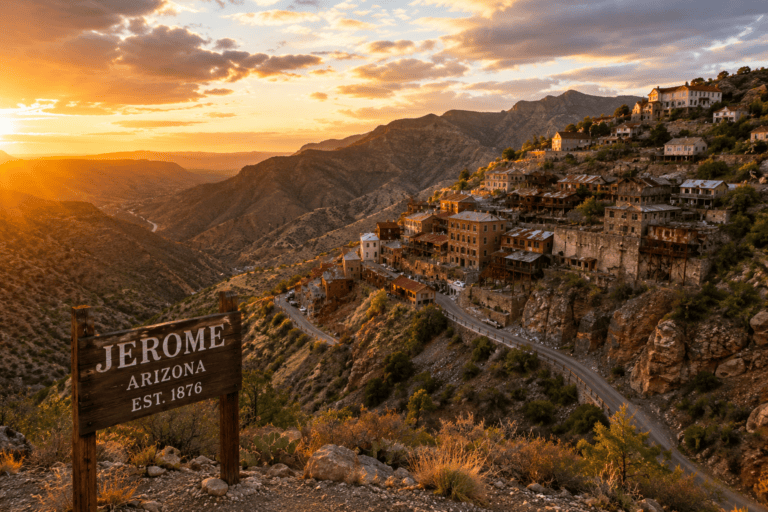
Because it sits in the middle of everything with plenty of hotels and services, Prescott Valley makes a practical home base for exploring north-central Arizona. Historic Prescott and its lakes are fifteen minutes west, the ranch country of Chino Valley is a short drive north, and the farms of Dewey-Humboldt sit just to the southeast. Push a little farther and the old copper town of Jerome, the red rocks of Sedona, and the Verde Valley are all within an easy day trip. Staying in Prescott Valley often means more room and a better rate than the tourist towns while keeping you close to all of it. For a lot of travelers, that combination of affordability and central location is the whole appeal.
When to visit and getting there
Prescott Valley is an easy fifteen-minute drive east of Prescott on Highway 69, and like the rest of the region it enjoys four real seasons at high elevation, with warm summers, crisp falls, and the occasional winter snow. There is no single tourist season here, since much of what the town offers is everyday life and events, so the best time to come is whenever there is a show at the Findlay Toyota Center or you simply need the practical side of the region, and the Town of Prescott Valley posts an events calendar worth checking. Pair it with a day in Prescott and you get the full picture of the area.
The everyday heart of the region
Prescott Valley will never be the postcard town, and it does not try to be. Its value is in being the place that actually makes the region work, the fast-growing, family-filled hub where people live, shop, and gather. From the heliograph history on Glassford Hill to the arena lights of the Findlay Toyota Center, it has more going on than its strip-mall first impression suggests. For more on the towns around Prescott and how they fit together, browse our things to do in Prescott guide and our history of Prescott, and join our free newsletter to keep up with events and news across the area.