Southeast of Prescott, where Highway 69 follows the Agua Fria River down toward the Bradshaw Mountains, sits one of the youngest towns in Arizona wrapped around some of its oldest history. Dewey-Humboldt only became a town in 2004, but the two communities that joined to form it, farming Dewey and mining Humboldt, go back to the earliest days of the territory. Today it is quiet, rural, and easy to drive right past, but it holds a smelter smokestack, a beloved pumpkin farm, and a genuinely rich frontier story. This is our guide to Dewey-Humboldt, Arizona, where it came from and what makes it worth the short trip.
Where Dewey-Humboldt is
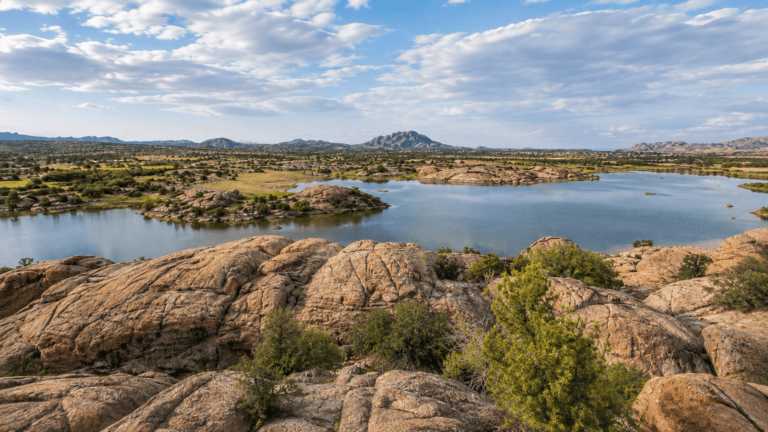
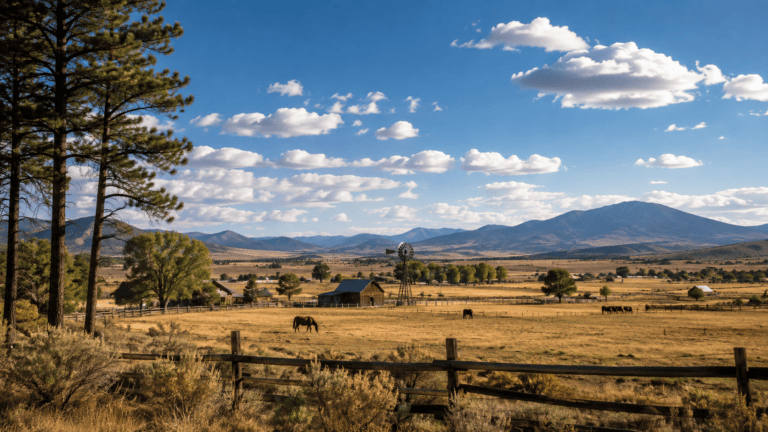
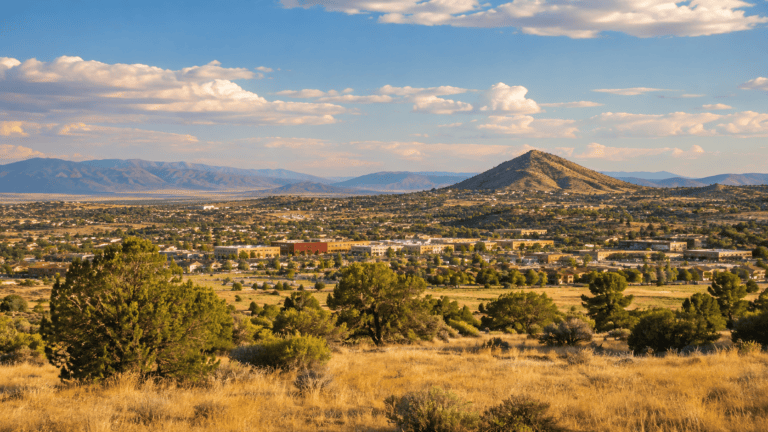
Dewey-Humboldt lies about fifteen to twenty minutes southeast of Prescott along Highway 69, in the high desert country where the Agua Fria River winds through open valley on its way south. It sits between Prescott and the old mining towns of Mayer and Crown King, with the Bradshaw Mountains rising to the south and the Verde Valley beyond to the east. The landscape is drier and more open than Prescott’s pines, a mix of ranch land, river bottom, and rolling high desert, which gives the town its quiet, spread-out, country feel.
Two towns, one identity
The hyphen in the name tells the story. Dewey and Humboldt grew up as two separate communities with two very different economies, one built on farming and ranching, the other on mining and smelting. For most of their history they were unincorporated neighbors, and it was not until 2004 that residents voted to join them into a single town. Notably, they did it in part to control their own growth and hold onto the rural character they valued, rather than to chase rapid development. That decision says a lot about the place. Dewey-Humboldt chose, quite deliberately, to stay small.
Humboldt and the mining boom
Humboldt is the mining half of the story. It began under the name Val Verde, and its fortunes were tied to the ore coming out of the surrounding hills. A prominent Prescott businessman, Levi Bashford, built the first mill here in 1876, opening the door to serious prospecting, and mines with names old-timers still remember, the Iron King, the DeSoto, the McCabe, and the Blue Bell, fed the local economy. In 1905, when the mine changed hands, the company town was renamed Humboldt in honor of Baron Alexander von Humboldt, the famed naturalist and explorer who had once predicted great mineral riches would be found in this part of the world.
The Iron King Mine and the smelter
All that ore needed somewhere to be processed, and that made Humboldt a smelter town. The Val Verde Smelting Company built a large smelter here in 1899, and the massive Iron King Mine, which came into its own in the early 1900s, grew into one of the largest lead and zinc producers in all of Arizona. At its peak in the 1930s and 1940s, the Iron King employed hundreds of workers, and the smelter and the railroad that served it were the beating heart of the community. For decades, Humboldt was defined by the rhythm of the mine and the smoke of the smelter, a genuine industrial town in the middle of ranch country.
The smokestack that still stands
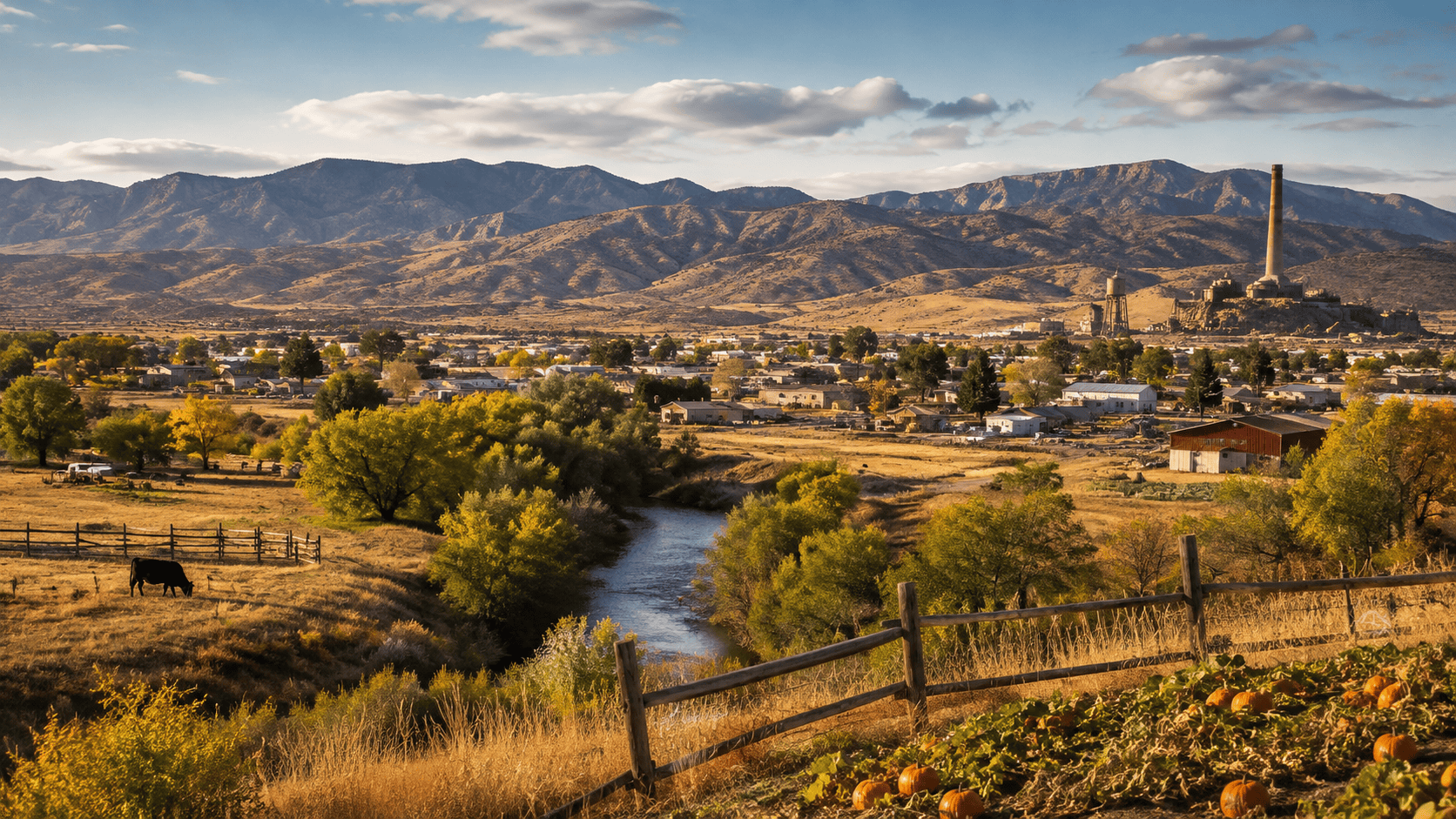
When the mining finally wound down and the railroad tracks were pulled up in 1971, the industry left, but it did not vanish. A tall smelter smokestack still rises over Humboldt, a lone and striking landmark that reminds everyone who passes of the town’s industrial past. It is the kind of monument no one built on purpose, an accidental piece of heritage, and it gives Humboldt a skyline unlike anything else in the region. For anyone interested in Arizona’s mining history, that stack is a powerful sight.
An honest word about the Superfund site
The mining left a harder legacy too, and it is worth being straight about it. The old Iron King Mine and Humboldt Smelter make up an Environmental Protection Agency Superfund site, because a century of mining and smelting deposited arsenic, lead, and other heavy metals in the soil and drainages, in places reaching into residential areas. Cleanup work has been ongoing. None of this should scare a visitor off from driving through town or stopping at the farm or the museum, but it is a real part of the story, and the sensible advice is simply to stay out of the old mine tailings and fenced areas rather than poking around them. It is history with a cautionary edge.
Dewey and its farming roots
Just to the north, Dewey grew up as the agricultural counterpart to Humboldt’s industry. It took shape along the fertile banks of the Agua Fria River, where settlers were diverting water to irrigate corn and other crops as early as the 1870s. A stage station and post office on the old Prescott-to-Phoenix wagon road through Black Canyon anchored the community, which was first known as Agua Fria. The town later took the name Dewey in honor of Admiral George Dewey, the hero of the 1898 Battle of Manila Bay in the Spanish-American War. Where Humboldt was about ore, Dewey was about cattle, crops, and the river.
King Woolsey, frontier pioneer
One name looms over Dewey’s early history: King S. Woolsey, a well-known Arizona pioneer whose ranch sat near the Old Black Canyon Highway. Woolsey was a rancher and frontiersman of the rough territorial era, and he built one of the early mills in the area. The ruins of his ranch house can still be spotted from the old highway, a quiet marker of just how far back this valley’s settled history runs. His land would go on to have a second life that generations of Arizona families remember fondly.
Young’s Farm, a beloved institution
In 1946, a chunk of Woolsey’s old land became Young’s Farm, and for sixty years it was one of the most beloved family destinations in central Arizona. The Young family raised turkeys and grew pumpkins, and the farm became famous for its hay rides, its pumpkin patch, its country restaurant, and above all its Pumpkin Fest every October, which drew crowds from all over the state. For countless Arizona families, a fall trip to Young’s Farm was an annual tradition. When the farm was sold to developers and closed in 2006, its loss was felt across the region, and it left a real hole in the local calendar.
Mortimer Farms carries the torch
That story has a happy sequel. In 2011, the Mortimer family took up the farming tradition in Dewey, and Mortimer Farms has grown into the area’s marquee agritourism destination, filling much of the void Young’s Farm left behind. The farm runs a country store stocked with fruit, vegetables, baked goods, and Black Angus beef raised right on the property, and it packs the calendar with seasonal fun. Summer brings sweet corn, and fall brings the big draw: a Pumpkin Festival and a sprawling corn maze set across a fifteen-acre pumpkin patch, complete with a genuinely spooky version of the maze after dark. Beyond the pumpkins, the farm runs hay rides, a petting area, pick-your-own produce, and a full slate of festival activities that make a real day of it, so it pulls families from Prescott, Prescott Valley, and well beyond every autumn. It has quietly become one of the largest fall attractions in the whole region. For families in the Prescott area, a fall visit to Mortimer Farms has become the new tradition, a direct descendant of the Young’s Farm days.
The Dewey-Humboldt Museum
To make sense of all this history in one stop, the Dewey-Humboldt Museum is the place to go. Its exhibits cover the town’s three great themes, mining, ranching, and pioneer life, and it offers a self-guided historic walking tour called A Walk Through Time that connects the dots between the scattered remnants around town. For a community this small to maintain a museum at all speaks to how much its residents value their heritage, and it is the best way for a visitor to understand what they are looking at when they spot that smokestack or those ranch ruins.
Community events through the year
Dewey-Humboldt keeps a lively calendar for its size. The Agua Fria Festival, held in September, is billed as Arizona’s oldest street fair, with live music, parades including a much-loved pet parade, vendors, games, and the kind of small-town spirit that has faded elsewhere. Dewey-Humboldt Days, a newer springtime celebration on Main Street, adds a family-friendly event in April, and the town’s Western heritage comes alive at gatherings like the Cowboy Gathering, complete with chuck wagon breakfasts and cowboy entertainers. These events are where the town’s ranching and mining roots show up as living tradition rather than museum history.
The Agua Fria River and the outdoors
The Agua Fria River that gave Dewey its start still shapes the town, and the open country around it rewards slow exploration. This is quiet back-road territory, where you can drive old highways past ranch land and river bottom, spot the Woolsey ruins, and take in wide high-desert views with the Bradshaw Mountains as a backdrop. The Agua Fria itself runs seasonally, greening the valley bottom after the summer monsoon and the winter rains, and birds and wildlife gather along its course wherever there is water. Anglers, walkers, and history buffs all find their own reasons to poke around the quiet back roads out here. The area sits at the doorstep of the old mining country to the south, with Mayer, Cordes, and the road up to Crown King all within reach for anyone who likes to chase Arizona’s ghost-town and back-country history. It is not a place of marked tourist trails so much as a place to wander and take your time.
The people who came before
As with everywhere in this region, the human story of the Agua Fria valley did not begin with settlers. Native peoples, including the Yavapai, lived across this country for generations, drawing on the river and the land long before miners and ranchers arrived. The same pattern that played out in Prescott and Chino Valley unfolded here, as the arrival of settlers displaced the people who were already present. An honest look at Dewey-Humboldt’s past holds that history alongside the mining and farming stories, all part of the same ground.
The character of the town today
Modern Dewey-Humboldt is small, home to only a few thousand people, and that is exactly how residents want it. Having incorporated specifically to guard against runaway development, the town has kept its rural, spread-out feel, with ranch properties, river bottom, and open desert rather than subdivisions and strip malls. It enjoys the same four-season, high-country climate as the rest of the region, and it moves at a genuinely slow pace. It is a place to appreciate for what it is not, as much as for what it is: not crowded, not developed, not in a hurry.
Where Dewey-Humboldt fits with Prescott
Dewey-Humboldt rounds out the four communities locals call the Quad Cities, alongside Prescott, Prescott Valley, and Chino Valley. It is best enjoyed as an easy add-on to a Prescott trip, most obviously in the fall, when a visit to Mortimer Farms pairs perfectly with a day in the historic city up the road. It offers something the busier towns do not, a direct, tangible link to both the mining and the farming that built this corner of Arizona, all within a short drive of the courthouse plaza.
When to visit and getting there
Getting to Dewey-Humboldt is a simple fifteen-to-twenty-minute drive southeast of Prescott on Highway 69, and you will want a car to explore its spread-out sights. Fall is the standout season, thanks to Mortimer Farms and its pumpkin festival and corn maze, while September brings the Agua Fria Festival and spring adds Dewey-Humboldt Days. Really, though, any clear day is a good one for a drive out to see the smelter stack, the ranch ruins, and the wide-open river country. It is the kind of trip that turns a Prescott vacation into a fuller picture of the whole region.
A rural corner worth the drive
Dewey-Humboldt will never be a crowded destination, and its residents made sure of that on purpose. Its value lies in what it preserves: a mining town’s smokestack, a pioneer’s ranch ruins, a farm tradition carried from one family to the next, and a slow, rural way of life that has mostly disappeared elsewhere. Understanding it completes the picture of the towns that surround Prescott. For more on the region and the history that ties it together, browse our History and Heritage section and our things to do in Prescott guide, and check the Town of Dewey-Humboldt for current event dates. To keep up with the whole area, join our free newsletter.