Moving to Prescott, Arizona: What to Know Before You Relocate
Fact-checked How we check
Prescott has a way of turning visitors into residents. People come up from the Phoenix heat for a summer weekend, walk the Courthouse Plaza under the big trees, hike around a lake in the Granite Dells, and start looking at real estate listings on the drive home. It’s easy to see why: a historic small-town downtown, four real seasons, a national forest at the edge of town, and a pace of life that feels a world away from the valley below. But moving here is a bigger decision than falling for it on vacation, and Prescott has real trade-offs that the brochures leave out — housing costs, water, wildfire insurance, and a job market built around a few big employers. This is our honest guide to moving to Prescott, Arizona: what it costs, what the weather is really like, how taxes, water, healthcare, and schools work, and how to test-drive the town before you commit.
| Population | About 48,400 in Prescott; about 119,000 across the Quad Cities (2025 Census estimates) |
| Elevation | About a mile high (roughly 5,300–5,400 feet) |
| Weather | January highs in the low 50s; July highs around 90 — about 16 degrees cooler than Phoenix |
| Median home price | About $655,000 in Prescott and $455,000 in Prescott Valley (August 2026) |
| Taxes | 2.5% flat state income tax, no state tax on Social Security, low property taxes |
| Phoenix | About 100 miles — roughly two hours to Sky Harbor |
Why people move to Prescott
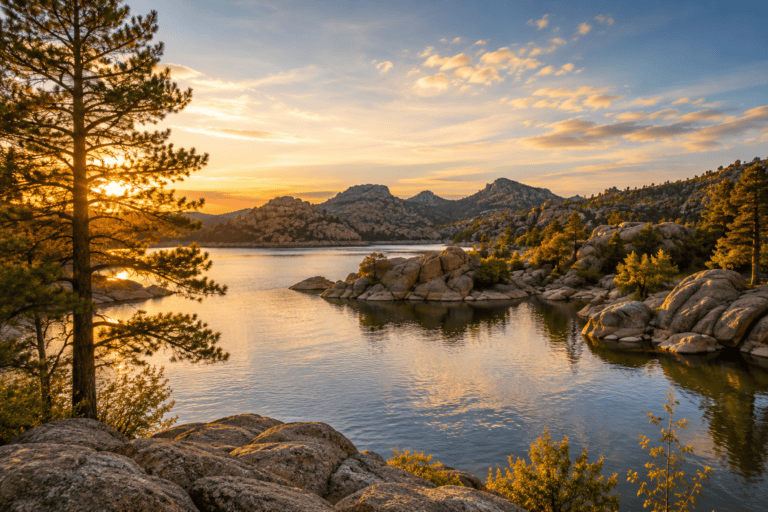
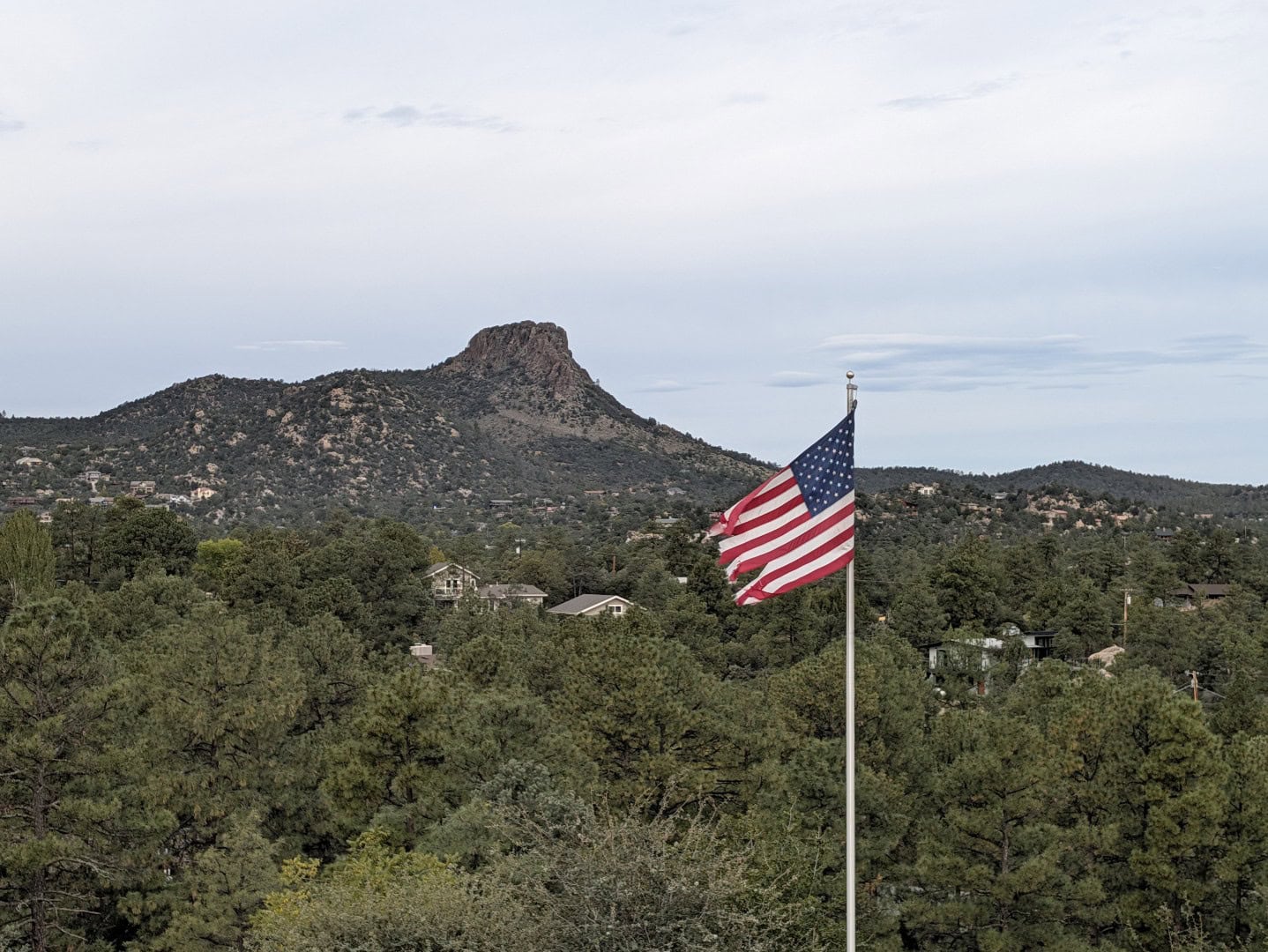
Ask a newcomer why they chose Prescott and you’ll hear the same handful of answers. The first is the climate: at about a mile high, Prescott gets genuine seasons without the extremes — warm summers instead of brutal ones, crisp falls, occasional snow that usually melts in a day or two, and springs that bring the trails back to life. The second is the outdoors. The Prescott National Forest wraps around town, and within a few minutes of downtown you can hike Thumb Butte, paddle among the granite boulders of Watson Lake, or ride the flat Peavine Trail; our guides to the best outdoor things to do in Prescott and the lakes of Prescott cover the highlights, and the Trail Finder will help you find your new favorite walk.
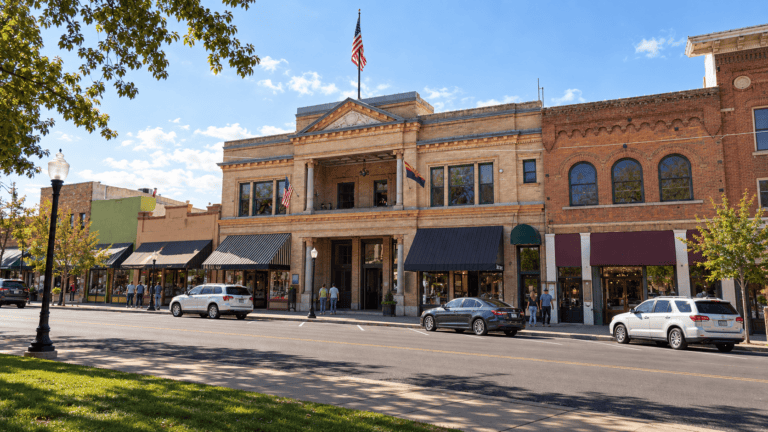
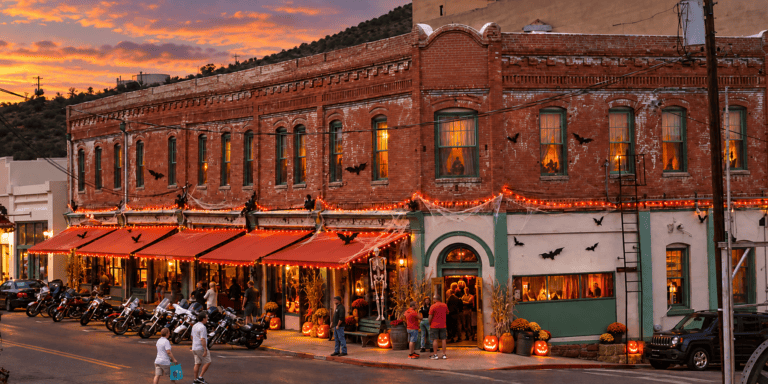
The third is the town itself. Prescott was Arizona’s first territorial capital, and its walkable downtown — the courthouse square, the saloons of Whiskey Row, Victorian neighborhoods, galleries, and a calendar full of festivals — gives it a sense of place that newer suburbs can’t match. Our guide to the history of Prescott tells that story. And Prescott has long been one of the country’s favorite places to retire: the city’s median age is about 60, and roughly 40% of residents are 65 or older, according to the Census Bureau’s latest five-year survey. That shapes the town in good ways — strong volunteer and civic life, a quieter pace — and in ways younger families should notice, like a smaller job market and fewer late-night options.
Prescott and its neighbors: the Quad Cities
“Moving to Prescott” often really means moving to the Quad Cities, the four communities that share the area’s roads, shopping, and services. Prescott (about 48,400 people in 2025) is the historic heart, with the downtown, the older neighborhoods, and the forest-edge homes. Prescott Valley, about 15 minutes east, has actually grown larger than Prescott, with about 52,400 residents; it’s newer, more suburban, home to more of the big-box shopping and the Findlay Toyota Center, and generally cheaper to buy into — see our guide to Prescott Valley. Chino Valley (about 13,800) to the north is ranch country with bigger lots and a rural feel, and Dewey-Humboldt (about 4,600) to the southeast is the smallest and most spread out. Our guides to Chino Valley and Dewey-Humboldt cover both. Which one fits depends on whether you value walkability and character, newer homes and lower prices, or space and quiet.
What the weather is really like
Prescott’s climate is the number-one reason many people move here, so it’s worth knowing the real numbers. According to the Arizona State Climate Office’s 1991–2020 normals, January averages a high of about 53°F and a low of about 26°F, while July averages about 90°F and 63°F — roughly 16 degrees cooler than a July afternoon in Phoenix. A typical year sees around 46 days at 90 degrees or warmer but only a couple of days over 100, and about 120 nights at or below freezing, so plan on a real winter coat. Snow averages about 10 inches a year in town under NOAA’s 1991–2020 normals (older long-term averages of 20-plus inches reflect snowier decades), usually arriving in a few small storms between November and March, with February the snowiest month, and it typically melts within a day or two. Some winters bring much more. Annual precipitation runs roughly 13 to 19 inches depending on where in the area you are, and much of it comes in the summer monsoon: the official season runs June 15 to September 30, with the afternoon thunderstorms usually arriving in early July and peaking in July and August. Fall is many locals’ favorite season — see our guide to fall in Prescott.
What it costs to live here
Housing is the biggest surprise for many newcomers. According to the Prescott Area Association of Realtors, the median sold price in August 2026 was about $655,000 in Prescott, about $455,000 in Prescott Valley, about $470,000 in Chino Valley, and about $380,000 in Dewey-Humboldt. For comparison, the Phoenix metro median was about $483,000 for the first eight months of 2026, and the national median for existing homes was about $429,000 in August. In other words, Prescott itself is one of the pricier markets in the state, and the neighboring towns are where buyers look for value.
Two cautions about those numbers. First, local medians swing a lot from month to month because the market is small — Prescott’s median was about $600,000 in July 2026 before jumping in August, then fell back to about $590,000 in September — so look at trends over several months rather than a single report. Second, the market has softened from its pandemic peak: inventory is up, homes are taking longer to sell, and price reductions have become common, which gives buyers more room to negotiate than they had a few years ago. Renting first is a smart way to learn the area; current asking rents for a two-bedroom run around $2,000 a month.
Insider Tip: Before you fall in love with a house, get a homeowners insurance quote and ask whether it’s on city water or a private well. In Prescott, both can change the real cost of a home more than the list price does.
Taxes
Arizona’s taxes are a big part of its appeal, especially for retirees. The state has a flat 2.5% income tax, and it doesn’t tax Social Security benefits. Property taxes are among the lowest in the country, with an effective rate on owner-occupied homes of about half a percent of value, roughly half the national level. Sales tax is where Arizona collects more: in Prescott the combined rate is about 9.3% (the city’s share rose in April 2025 with a dedicated public-safety tax), and in Prescott Valley it’s about 9.2%. Instead of a yearly property tax on vehicles, Arizona charges a vehicle license tax at registration that’s based on the car’s original sticker price and drops every year — so a new car costs noticeably more to register than an older one.
Water: what every buyer should understand
Water is the most important long-term issue in the Prescott area, and it’s worth understanding before you buy. Prescott sits in the state’s Prescott Active Management Area, one of a handful of regions where Arizona regulates groundwater. Its official goal was to reach “safe yield” — pumping no more groundwater than is replenished — by 2025, and according to the University of Arizona’s Water Resources Research Center, the area has been pumping more than it recharges for nearly every year since 1985. Because of that, new subdivisions of six or more lots must prove a 100-year water supply, and the City of Prescott allots only a limited amount of water to new development each year. Smaller lot splits can still rely on private “exempt” wells, of which there are thousands in the area.
For the future, Prescott bought the Big Chino Water Ranch north of town in 2004 as a potential new supply, with Prescott Valley sharing the cost. Importing that water would require a roughly 30-mile pipeline that hasn’t been built; recent cost estimates run into the hundreds of millions of dollars, Prescott voters may have to approve the financing, and the project faces questions about its effect on the upper Verde River and about how much of that water the state will count toward Prescott’s supply. The city’s long-term water management plan is scheduled to be finalized by the end of 2026. Reasonable people in the area disagree sharply about the best path — conservation, new supply, or limits on growth — so read local coverage from several perspectives.
What this means for you as a buyer: ask whether a property is on a city water system or a private well, and for a well, ask about its depth, output, and history. Expect water to remain a live issue in local politics, and factor it into how you think about new development and long-term growth.
Get the Insider in your inbox
Local events, new places, and weekend ideas in one friendly email.
Wildfire and home insurance
Living next to 1.25 million acres of national forest is a big part of Prescott’s appeal, and it comes with wildfire risk. The Prescott National Forest typically puts fire restrictions in place in late spring and lifts them once the monsoon rains arrive in July, and many neighborhoods on the edge of town sit in what planners call the wildland-urban interface. The area takes this seriously — Timber Ridge in Prescott was the first recognized Firewise community in the nation, and dozens of local neighborhoods have earned the designation since. The practical effect for newcomers is insurance: Arizona’s insurance department has reported rising premiums and non-renewals in wildfire-prone areas, and state lawmakers have held town halls on non-renewals in the Quad Cities. Get quotes before you make an offer, ask whether a neighborhood is a Firewise community, and plan to keep brush cleared around your home.
Healthcare
Prescott’s main hospital system is Dignity Health Yavapai Regional Medical Center, with its West Campus in Prescott and East Campus in Prescott Valley; both have Level IV trauma designation. Veterans are well served by the Bob Stump VA Medical Center in Prescott, the hub of the Northern Arizona VA Health Care System, which serves more than 34,000 veterans. The honest caveat is specialist care: the area doesn’t have enough providers for its fast-growing, older population, and many residents drive to Phoenix for certain specialists and procedures. The nearest Level I trauma centers are in Flagstaff and Phoenix. If you or a family member needs regular specialty care, check provider availability and wait times before you move.
Schools and colleges
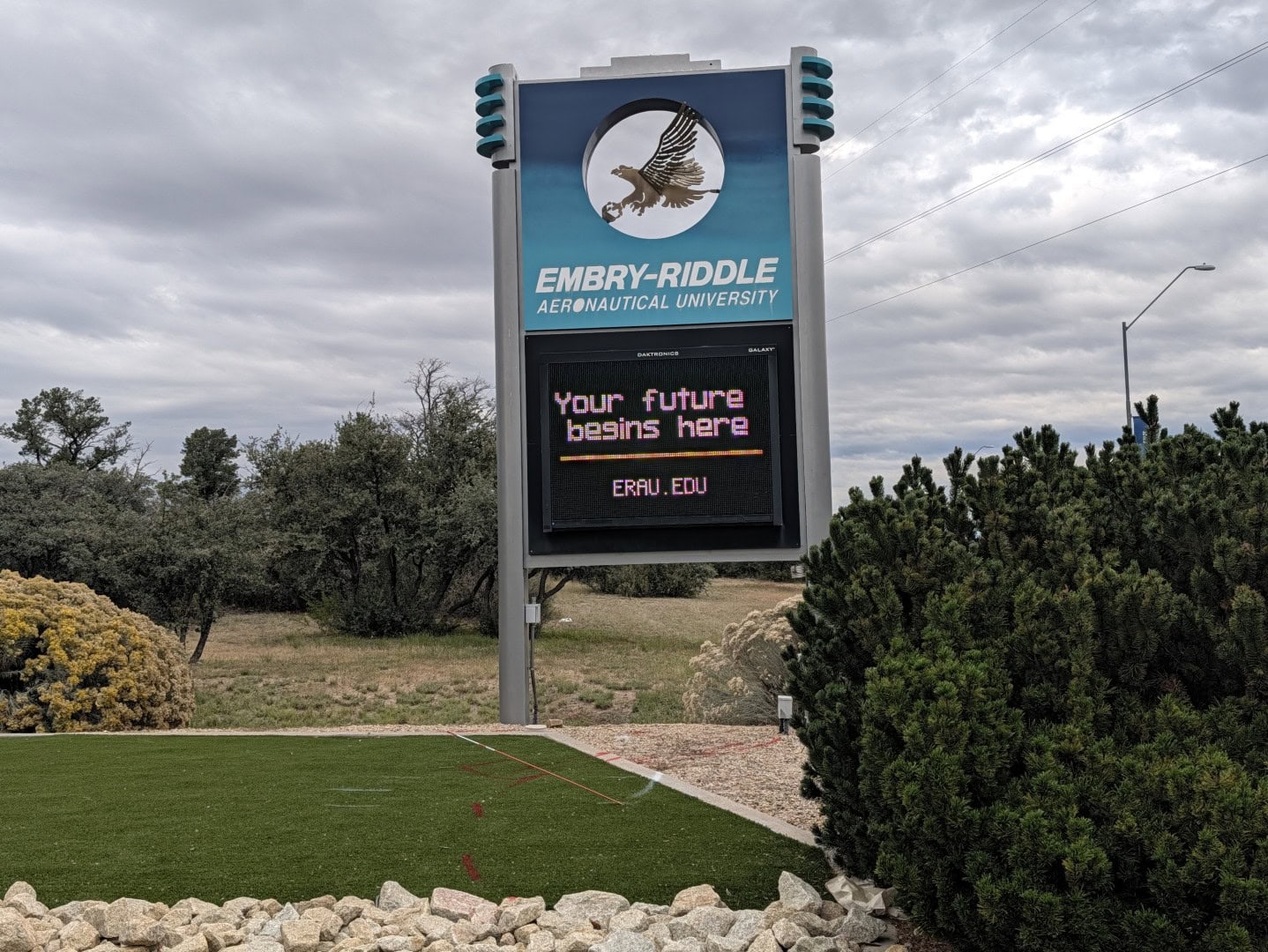
Families have a mix of options. The Prescott Unified School District serves about 3,900 students, while the Humboldt Unified School District covers Prescott Valley and Dewey-Humboldt. Arizona’s charter system adds choices like BASIS Prescott and Tri-City College Prep, among others. For higher education, Prescott punches above its weight: Embry-Riddle Aeronautical University runs its western campus here, focused on aviation, aerospace, engineering, and security studies; Yavapai College offers community-college programs and a lively continuing-education scene popular with retirees; and small, independent Prescott College is known for environmental and experiential programs.
Jobs and working remotely
Prescott’s economy leans on healthcare, government, and education. The largest employers include Yavapai Regional Medical Center, Yavapai County, the VA, Yavapai College, Embry-Riddle, and the City of Prescott, with retail, tourism, and construction filling out much of the rest. That base is stable but not large, and high-wage private-sector jobs are limited; the metro area’s unemployment rate was 5.6% in August 2026. Many newcomers solve that by bringing their work with them — remote work is common, and about 91% of Prescott households have a broadband subscription — or by retiring here. If you’ll need a local job, line it up before you move.
Getting around and getting away
You’ll want a car in Prescott; there’s no meaningful public transit for daily life, and most errands mean a short drive. Phoenix is about 100 miles away via State Route 69 and Interstate 17, roughly two hours to Sky Harbor without traffic. If you’d rather not drive to the airport, the Groome Transportation shuttle runs between Prescott, Prescott Valley, and Sky Harbor. Prescott Regional Airport also has commercial service — United Express flights to Denver and Los Angeles, which connect you to the rest of the country without the trip to Phoenix. Locally, the main pain point is traffic on State Route 69 through Prescott Valley at rush hour, which has seen a string of widening and safety projects. Our guide to visiting Prescott has more on getting here and getting around.
The honest trade-offs
No place is perfect, and Prescott’s downsides are worth naming plainly. Housing in Prescott proper costs more than in metro Phoenix and well above the national median. Water is a long-term question the region hasn’t settled. Wildfire risk is real and is making insurance harder to get in some neighborhoods. Specialist healthcare often means a drive to Phoenix. Local jobs are limited, especially at higher salaries. Nightlife is mostly Whiskey Row and a few downtown spots, and the town quiets down early. And like many fast-growing small towns, Prescott has some friction between longtime residents and newcomers over growth and change. For many people, the climate, the outdoors, the low taxes, and the small-town character far outweigh those trade-offs — but go in with your eyes open.
How to test-drive Prescott before you move
The best way to decide is to live like a local for a little while. Visit in more than one season — a July monsoon week and a January cold snap tell you more than a perfect October weekend. Stay a full week rather than a weekend, ideally in a vacation rental in the neighborhood you’re considering; our guide to where to stay in Prescott covers the options. Drive your future commute at rush hour, find the nearest grocery store and urgent care, and try the trailhead you’d use every morning. Talk to an insurance agent and a local real estate agent about water and fire before you write an offer. And spend an evening downtown — have dinner off the plaza, catch a band on Whiskey Row, and check our events calendar to see what a normal week here looks like. If you still can’t stop looking at listings on the drive home, you’ll know.
Prescott isn’t the cheapest place in Arizona, and it isn’t the easiest, but for the people who move here it’s often the place they wish they’d found sooner: a real town with real seasons, a forest out the back door, and a downtown where you’ll start running into people you know. Do your homework on the costs and the trade-offs, and it may just turn out to be home.
Figures in this guide are the most recent available as of September 2026, from the U.S. Census Bureau, the Prescott Area Association of Realtors, Phoenix REALTORS, the National Association of Realtors, the Arizona Department of Revenue, the Arizona State Climate Office, the University of Arizona Water Resources Research Center, the City of Prescott, and the U.S. Bureau of Labor Statistics. Prices, rates, and services change — confirm current details before making decisions.
Something changed? Let us know
Enjoyed this? Get more Prescott in your inbox
Weekend picks, new places, and local events from people who love Prescott. Free, and you can unsubscribe anytime.