Prescott vs. Prescott Valley vs. Chino Valley vs. Dewey-Humboldt: Where Should You Live?
Fact-checked How we check
When people say they’re moving to Prescott, they often mean somewhere in the cluster of four towns that locals call the Quad Cities: Prescott itself, Prescott Valley, Chino Valley, and Dewey-Humboldt. They share a county, a mountain climate, and a lot of daily life, but they’re surprisingly different places to live. Prescott is the historic county seat with the old downtown and the pines; Prescott Valley is newer, faster-growing, and more suburban; Chino Valley is rural, with acreage and horse property; and Dewey-Humboldt is the smallest and most country. This guide compares them side by side, using official data, so you can figure out which one fits.
This is part of our guide to moving to Prescott. For more on prices and taxes, see the cost of living in Prescott.
The four towns side by side
| Prescott | Prescott Valley | Chino Valley | Dewey-Humboldt | |
|---|---|---|---|---|
| Population (2025 estimate) | 48,420 | 52,423 | 13,832 | 4,604 |
| Growth since 2020 | +5.7% | +12.1% | +6.2% | +6.4% |
| Elevation (approx.) | 5,370 ft | 5,000 ft | 4,700 ft | 4,600–4,800 ft |
| Typical home value (Sept 2026) | $592,855 | $454,799 | $493,692 | $467,128 |
| Median household income | $70,874 | $74,569 | About $61,000 | About $67,000 |
| Median age | 59.7 | 49.2 | 51.9 | About 53 |
| Sales tax | 9.30% | 9.18% | 10.35% | 8.35% |
| Water | City of Prescott | Mostly town water | Mostly private wells | Private wells or small private systems |
| School district | Prescott Unified | Humboldt Unified | Chino Valley Unified | Humboldt Unified |
| Drive to downtown Prescott | — | About 20 minutes | About 25 minutes | About 25–30 minutes |
Sources: U.S. Census Bureau (2020 Census and 2025 population estimates; American Community Survey 2020–2024 for income and age); Zillow Home Value Index, September 2026; Arizona Department of Revenue rate table, November 2026; USGS elevation data; drive times are estimates without traffic. Chino Valley and Dewey-Humboldt Census figures have wide margins of error because of small samples.
Prescott: historic, walkable, and in the pines
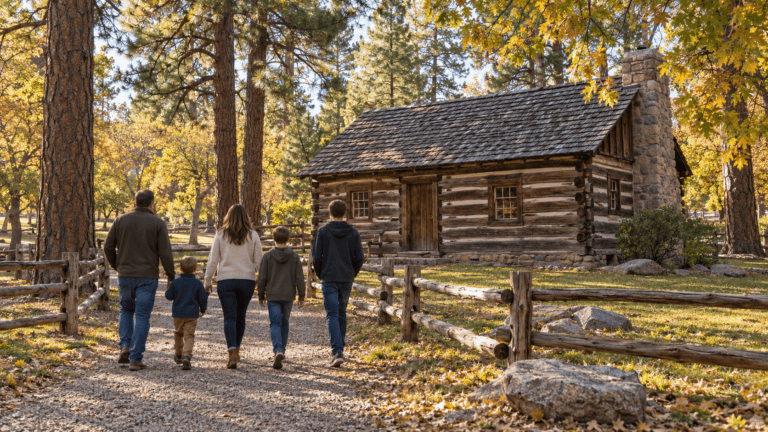
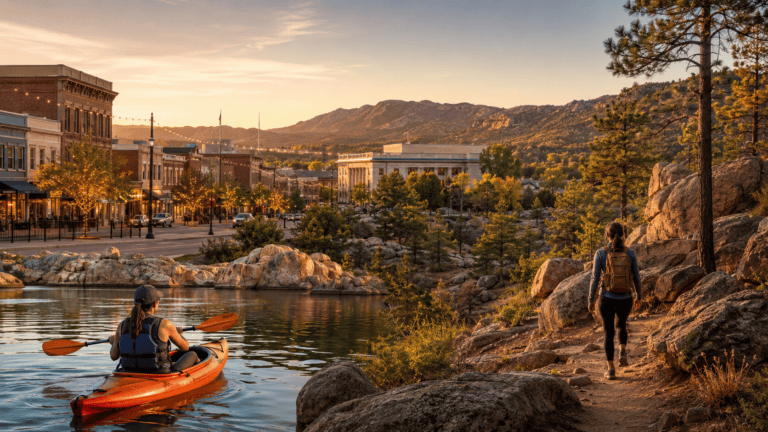
Prescott is the original town, founded in 1864 as Arizona’s first territorial capital, and it’s still the county seat and the cultural center of the area. If you picture yourself walking to the Courthouse Plaza for a concert, living in a Victorian on a tree-lined street, or hiking in the ponderosa pines from your back door, this is your town. Prescott has the area’s oldest housing: Census data shows about 11% of its homes were built before 1960, and the city has more than a dozen National Register historic districts. It also has newer master-planned areas like Prescott Lakes and a big growth area around Deep Well Ranch in the north.
Prescott sits higher than its neighbors, at roughly 5,400 feet downtown, so it’s a bit cooler and gets more of the area’s limited snow. It also has the highest home values in the area, a typical value of about $593,000 in September 2026, and the oldest population, with a median age near 60. Water comes from the City of Prescott, and the city’s school district is Prescott Unified. For a sense of life here, see our guides to things to do in Prescott and Prescott’s history.
Best for: people who want history, walkability, a downtown with restaurants and events, and quick access to forest trails, and who can afford the higher prices.
Prescott Valley: newer, bigger, and growing fastest
Prescott Valley, about 20 minutes east along Highway 69, is now the largest of the four towns. It passed Prescott in population in the 2020 Census and has grown about twice as fast since. It’s a younger, more suburban community: the median home was built in 2002, more than half its homes date from 2000 or later, and the median age is about 49. You’ll find newer subdivisions, the area’s big-box shopping, the Findlay Toyota Center arena, and the Civic Center with its library and public art.
Homes are more affordable than in Prescott, with a typical value around $455,000 in September 2026, and household incomes are a bit higher. Prescott Valley sits around 5,000 feet, on open grassland rather than in the pines, so expect wider views, more wind, and fewer trees. Most addresses are on town water, schools are in the Humboldt Unified School District, and the town’s own amenities include Fain Park and the Iron King Trail. See our Prescott Valley guide.
Best for: families and working-age households who want newer homes, more space for the money, and easy shopping, and don’t mind a short drive to downtown Prescott.
Chino Valley: rural living and room for horses
About 25 minutes north of downtown Prescott on Highway 89, Chino Valley is the area’s country town in spirit: open ranch land, bigger lots, and a slower pace. The town’s development rules require lots under an acre to be on an approved water or sewer system, and many homes sit on larger parcels with private wells, which makes Chino Valley popular with people who want horses, chickens, or simply elbow room. It sits lowest of the three larger towns, at about 4,700 feet, so its winters are a little milder.
The trade-offs are real. Most Chino Valley homes rely on private wells; the town estimated about 9,000 exempt wells in and around town, and in 2026 news reports described some wells in the area going dry, with residents hauling water. Chino Valley also has the highest sales tax of the four towns, 10.35%. Schools are in the Chino Valley Unified School District. See our guides to Chino Valley and things to do in Chino Valley.
Best for: people who want acreage, animals, and a rural feel, and who are willing to do their homework on wells and water.
Dewey-Humboldt: Arizona’s country town
Dewey-Humboldt, incorporated in 2004, calls itself “Arizona’s Country Town,” and with about 4,600 residents it’s by far the smallest of the four. It sits southeast of Prescott Valley along Highways 69 and 169, with very low-density, rural housing on large lots. It’s home to Mortimer Farms, a popular family farm, and it’s the closest of the four towns to I-17 for trips to Phoenix and Flagstaff.
The town doesn’t provide water, so homes use private wells or small private water systems, and arsenic has been found in some local wells, so testing matters. Children attend Humboldt Unified schools, shared with Prescott Valley. Dewey-Humboldt has the lowest sales tax of the four towns (8.35%), and it’s about 25 to 30 minutes from downtown Prescott. See our Dewey-Humboldt guide.
Best for: people who want quiet, space, and a country lifestyle, with easy interstate access.
Get the Insider in your inbox
Local events, new places, and weekend ideas in one friendly email.
How to choose
- You want to walk to dinner and live with history: Prescott, especially the neighborhoods around downtown. See our moving guide and watch for our neighborhoods guide.
- You want a newer home and more for your money: Prescott Valley.
- You want acreage or horses: Chino Valley or Dewey-Humboldt, after a careful look at water.
- You want pines and forest trails: Prescott, or the unincorporated forest communities south of town.
- You want the shortest drive to Phoenix: Prescott Valley or Dewey-Humboldt, both closer to I-17.
- You’re retiring: all four are popular with retirees; Prescott and Prescott Valley are closest to the hospitals and services.
Don’t skip the water question
Water is the single biggest practical difference between the towns. In Prescott and most of Prescott Valley, you’re on a municipal system. In much of Chino Valley and Dewey-Humboldt, you’ll own a private well, which means your water supply, its depth, and its quality are your responsibility. Before buying outside a municipal service area, ask for the well’s records, have the water tested, and talk to neighbors about how their wells have held up. Our moving guide has more on Prescott-area water.
What about addresses outside town limits?
A lot of homes with Prescott, Prescott Valley, or Chino Valley mailing addresses are actually in unincorporated Yavapai County, such as the Williamson Valley corridor and the forested areas south of Prescott. Unincorporated areas have a lower sales tax (6.35%), but services like water, trash, and road maintenance can differ, and school district lines don’t always follow mailing addresses. Always check the specific address with the county.
Quick answers
Is Prescott or Prescott Valley better to live in?
It depends on what you want. Prescott has the historic downtown, the pines, and more character, at higher prices. Prescott Valley has newer homes, lower prices, more shopping, and a younger population.
Which Quad Cities town is cheapest?
By typical home value in September 2026, Prescott Valley (about $455,000), followed by Dewey-Humboldt (about $467,000), Chino Valley (about $494,000), and Prescott (about $593,000).
How far is Prescott Valley from Prescott?
About 10 to 12 miles, roughly 20 minutes by car along Highway 69 without traffic.
Which town gets the least snow?
The lower towns, Chino Valley and Dewey-Humboldt, generally see a little less snow and milder winter nights than Prescott, which sits several hundred feet higher.
For the numbers behind this comparison, see our cost of living guide, and for the bigger picture, our guide to moving to Prescott.
Something changed? Let us know
Enjoyed this? Get more Prescott in your inbox
Weekend picks, new places, and local events from people who love Prescott. Free, and you can unsubscribe anytime.