Prescott is a small city that behaves like a much bigger one when it comes to things to do. It sits a mile high in the pines, it gets four real seasons, and it packs a walkable historic downtown, four lakes, a national forest full of trails, and a row of good museums into an area you can cross in about fifteen minutes. You can spend a morning on Whiskey Row and an afternoon paddling a kayak through granite boulders without ever driving very far. This is our guide to the best things to do in Prescott, from the stops every visitor should hit to the places locals actually spend their weekends.
Quick Facts: Visiting Prescott
| Best for | First-time visitors, families, outdoors, history, food |
| Cost | Much is free (plaza, trails); lake parking about $3; museums modest |
| Getting around | Walkable downtown; a car for the lakes, trails, and day trips |
| Best time | Four real seasons; spring to fall for the outdoors, December for the Christmas City |
| Last verified | August 2026 |
Walk the Courthouse Plaza and Whiskey Row
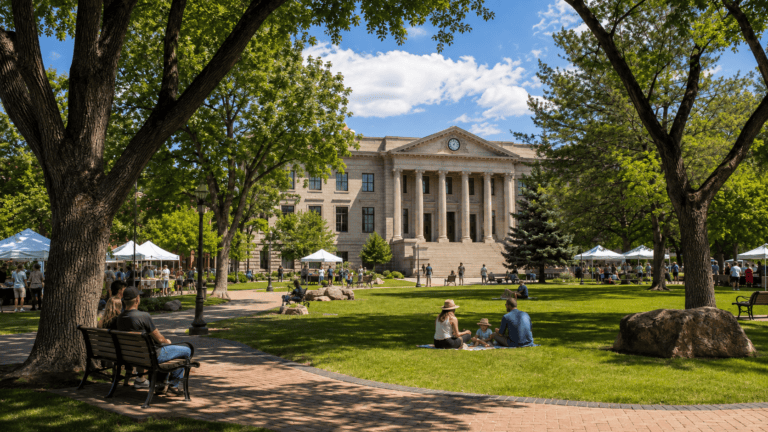
Start where the town started, at the Courthouse Plaza. The 1916 Yavapai County Courthouse sits in the middle of a full block of lawn and old trees, and the plaza around it works as the living room of the whole town. People read on the grass, kids run around the Bucky O’Neill statue, and through the warmer months there is almost always something going on, from summer concerts to art fairs to the holiday lighting that draws crowds every winter. If you want the story behind all of it, we cover that in our history of Prescott.
Directly across Montezuma Street is Whiskey Row, the single block that once held around forty saloons and still carries the name. The anchor is the Palace, opened in 1877 and the oldest continuously operating bar in Arizona, where the hand carved bar is the same one patrons hauled across the street during the great fire of 1900. The Row is still where a lot of the nightlife happens, with live music most weekends at spots like Matt’s Saloon. During the day it pairs easily with the antique shops, art galleries, and local stores that fill the century old buildings downtown. Superstition Meadery, in the Burmister building across from the courthouse, pours flights of honey wine that have won awards well beyond Arizona, and the historic Elks Theatre a block away still hosts shows in a restored opera house.
Insider Tip: Park once near the Courthouse Plaza and do downtown on foot. Whiskey Row, the restaurants, the galleries, and the museums are all within a few blocks. Then drive out to the lakes and trailheads, which are only about ten minutes away. And for the record, locals say it PRES-kit, like biscuit.
Spend a day at the lakes and the Granite Dells
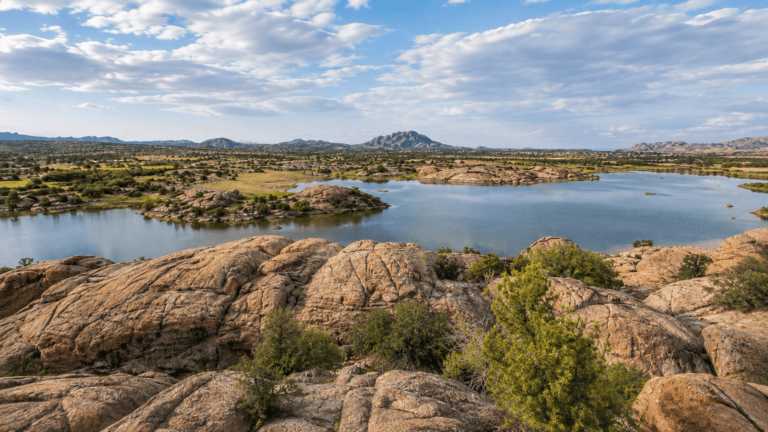
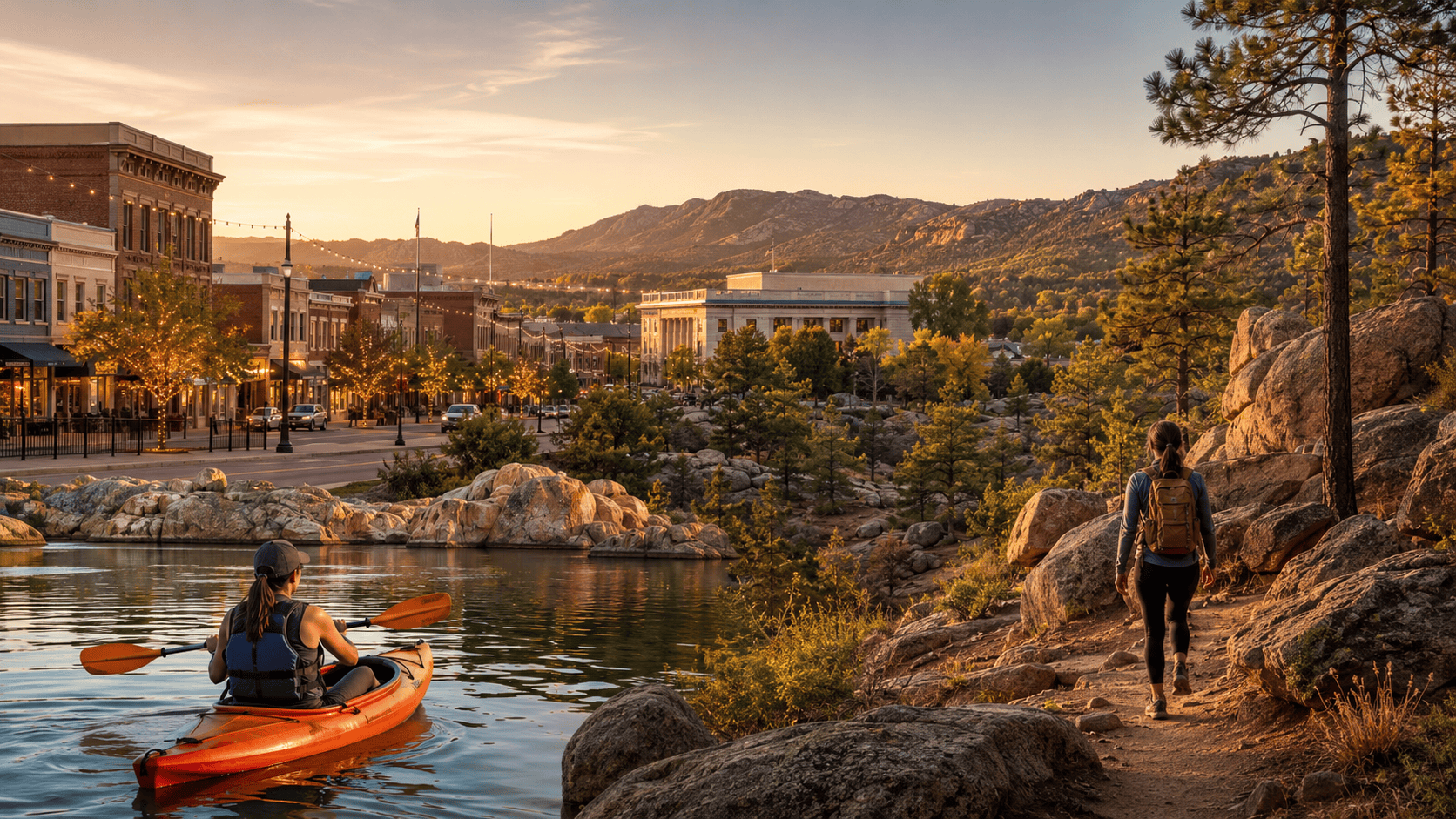
The thing that surprises first time visitors is that Prescott has lakes, four of them, tucked into the pines and boulders. The most famous is Watson Lake, set inside the Granite Dells, a landscape of huge rounded granite boulders piled up like something out of another planet. It is the most photographed spot in the area for good reason. You can rent a kayak and paddle out among the rock formations, drop a line for fish, or walk the loop trail that runs around the water and threads through the Dells. There is a small daily parking fee, usually around three dollars, and a campground that runs spring through fall. Water rules at Watson change from time to time, so check the signage for what is allowed the day you go.
Just to the west, Willow Lake offers a quieter version of the same scenery, with the Constellation Trails running through the boulders along its edge and the Heritage Park Zoological Sanctuary nearby, a nonprofit that houses rescued black bears, mountain lions, foxes, and more. South of town, Lynx Lake is the calm, pine ringed one, good for an easy morning of fishing or a paddle, with a lakeside cafe and some of the best fall color around. Goldwater Lake rounds out the four and is the local favorite for a low key family afternoon. For the full rundown, see our guide to the Prescott lakes.
Hike Thumb Butte and the Prescott National Forest
Prescott is wrapped in the Prescott National Forest, which means the trailheads sit minutes from downtown, not hours. The signature hike is Thumb Butte, the rock topped landmark you can see from all over town. The loop is short, a little under two miles, and moderately steep, and the payoff is a view over all of Prescott and, on a clear day, the San Francisco Peaks near Flagstaff a hundred miles north. Peregrine falcons nest on the butte, so keep an eye up.
Beyond Thumb Butte, the options run deep. Granite Mountain and the Granite Basin area give you longer climbs and big granite views. The Peavine Trail is the easy, flat favorite, an old railroad grade turned into a walking and biking path that runs right along Watson Lake and through the Dells, and it connects to the Iron King Trail heading toward Prescott Valley. For an easy nature walk with kids, the trails at the Highlands Center for Natural History lead out into the forest with signs explaining the local plants and wildlife along the way. Our beginner hikes guide covers the easiest ones in detail.
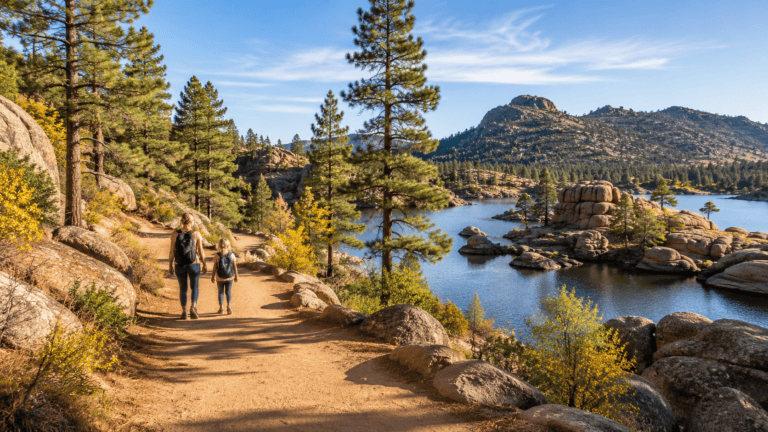
Hiking is only the start of what the forest and the Dells offer. The granite draws rock climbers and boulderers, the Peavine and the wider trail network are popular with mountain bikers, Watson Lake has a disc golf course along its shore, and the lakes are stocked for fishing. If your idea of a good day is outside and moving, Prescott gives you more than you can get to in one trip, which is a big part of why people keep coming back.
See the museums and the frontier history
For a town its size, Prescott has an unusual number of good museums, and most of them sit within a few minutes of each other. The Sharlot Hall Museum is the one to start with. It occupies the grounds of the original territorial Governor’s Mansion, a log building from the founding era, and it is the best single place to understand how the town and the Arizona Territory came together. The Phippen Museum, just north of Watson Lake, is devoted to the art of the American West, from cowboy and ranching scenes to Native work. The Museum of Indigenous People, formerly the Smoki Museum, focuses on the art and cultures of the region’s Native peoples. Out at the old Army post, the Fort Whipple Museum tells the military side of Prescott’s early years. For the full picture, see our guide to arts and culture in Prescott.
Explore Prescott’s haunted side
Prescott’s frontier past left it with a reputation as one of the most haunted towns in Arizona, and chasing its ghost stories is one of the more memorable things to do after dark. The Palace and the rest of Whiskey Row, the Hassayampa Inn, the Hotel Vendome, and the Hotel St. Michael all come with well-worn legends, and a couple of local companies run evening ghost tours that blend the hauntings with real history. October is the high season, but the stories are good year round. See our guide to haunted Prescott for the legends, the most haunted spots, and how to take a ghost tour.
Time your trip around the events
Prescott runs on its calendar, and a lot of the best things to do here only happen at certain times of year. The biggest is Prescott Frontier Days, billed as the World’s Oldest Rodeo, which has run every summer since 1888 and takes over the town around the Fourth of July. Winter is the other peak, when Prescott leans hard into its reputation as Arizona’s Christmas City, with the courthouse wrapped in lights, a parade, and enough holiday events to fill a weekend. In between, the plaza hosts concerts, art and craft fairs, and a farmers market, and the downtown bars and theaters keep live music going year round. If you are trying to decide when to come, pick a weekend that lines up with something on the plaza and you will catch the town at its best.
When to visit: Prescott’s four seasons
One of the best things about Prescott is that it actually has four seasons, which is rare in Arizona. Spring is mild and green, with wildflowers on the trails and comfortable days for hiking before the summer crowds arrive. Summer is the busy stretch, with warm days that rarely climb the way Phoenix does and cool evenings that make the plaza concerts a pleasure, plus the short, dramatic monsoon storms that roll through most July and August afternoons and green up the whole high country. Fall might be the local favorite, when the air turns crisp, the crowds thin, and the cottonwoods and maples around Lynx Lake and the creeks put on real color through October. Winter is cold and can bring snow, which surprises people until they remember the mile-high elevation, and it is also when the town becomes Arizona’s Christmas City, so even a freezing weekend downtown comes with lights, a parade, and a festive plaza. There is no wrong time to come. It just depends on what you are after: wildflowers, warm evenings, fall color, or snow on the pines.
Eat, drink, and shop downtown
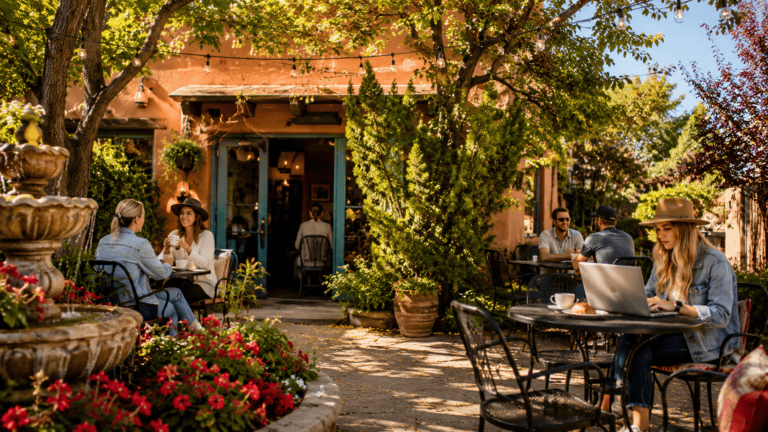
Most of the eating and drinking worth doing clusters within a few blocks of the courthouse, which makes downtown easy to graze through on foot. Whiskey Row has the historic saloons, and the Palace serves a full menu alongside its famous bar, so it works for dinner as much as for a drink. LazyG Brewhouse pours award-winning local craft beer nearby, and Superstition Meadery has turned honey wine into a destination that pulls people from out of state. Around them the downtown blocks hold coffee roasters, bakeries, chocolate makers, taquerias, and a rotating set of restaurants that changes often enough to reward a repeat visit. For the full rundown, see our guide to where to eat and drink in Prescott.
If you are in town on a Saturday morning in the warmer months, the farmers market is worth building into the day, with local produce, baked goods, and makers set up a short walk from the plaza. Between the market, the antique shops, and the arts district just north of the square, downtown is the kind of place where you can park once and lose an afternoon without meaning to.
Explore the towns and day trips nearby
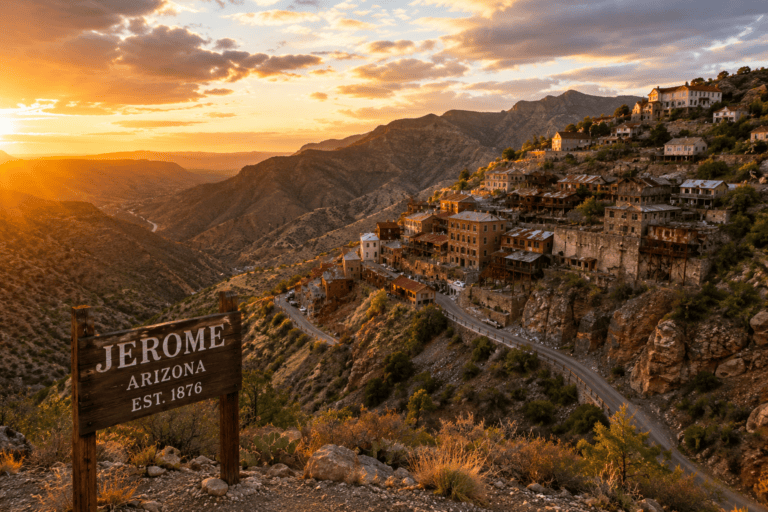
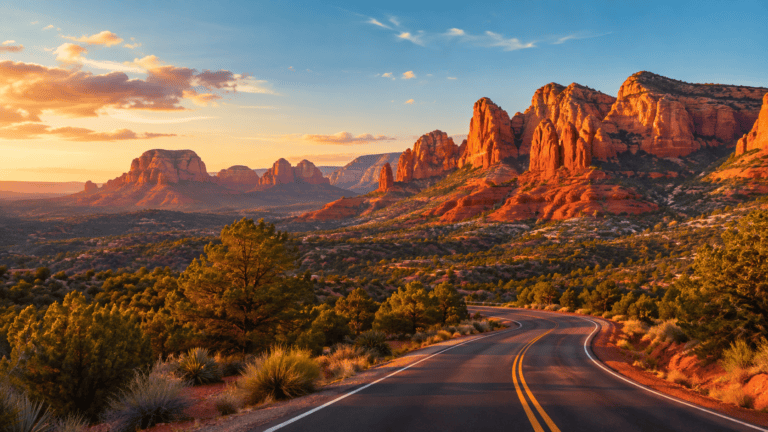
Prescott anchors a cluster of towns worth folding into a visit. Prescott Valley, just east, has the Findlay Toyota Center for concerts and events and the trails and ballfields at Fain Park. Chino Valley to the north keeps a slower, ranch country feel, and Dewey-Humboldt to the southeast is home to Mortimer Farms, a working farm that turns into a major fall and pumpkin season draw. Push a little farther and Prescott makes a good base for the rest of north central Arizona. Sedona’s red rocks are about an hour and a half away, the old mining town of Jerome and the Verde Canyon Railroad are a similar drive, and the South Rim of the Grand Canyon is roughly two and a half hours north. Our guides to Sedona and Jerome cover the two best day trips in detail.
Free and family-friendly things to do
Plenty of the best things to do in Prescott cost little or nothing. The Courthouse Plaza is free to wander any day of the year, and in summer the concerts and events on the lawn are open to everyone. The Peavine Trail along Watson Lake is an easy, mostly flat walk or bike ride that kids and grandparents can both handle, and the granite boulders of the Dells are a place kids love to scramble around. For a paid outing that earns its keep with children, the Heritage Park Zoological Sanctuary near Willow Lake lets them get close to rescued bears, mountain lions, and other animals while supporting a local nonprofit. Add the lakes for fishing and paddling, the frontier buildings at the Sharlot Hall Museum, and an ice cream on the plaza, and you have enough to fill a family weekend without much of a budget.
A few things to know before you go
A couple of practical notes will make a Prescott trip smoother. The lakes charge a small daily parking fee, so keep a few dollars handy. The elevation is around a mile high, which means milder summers than the desert but real cold and the occasional snow in winter, so check the forecast and dress in layers. And if you want to sound like a local the moment you arrive, say it PRES-kit, like biscuit, not Pres-cott. Get that right and you are halfway to fitting in.
Getting around is easy. Downtown is walkable once you park, and there is a public garage a block off the plaza, but you will want a car to reach the lakes, the trailheads, and the nearby towns, since they are spread across the area. Prescott is also a genuinely dog-friendly place, with water bowls outside shop doors and dogs welcome on most trails and patios, so there is no need to leave yours behind.
There is far more here than one visit can cover, which is the whole point of a town people tend to come back to. For more guides to the trails, restaurants, events, and history around Prescott and the towns nearby, our Things to Do section is the place to look, and you can get the best of it in your inbox through our free newsletter.