Drive fifteen minutes north of Prescott and the pines open up into wide grassland, the traffic thins, and horses start appearing in the fields. This is Chino Valley, Prescott’s quieter, more rural neighbor, a ranch-country town that a lot of visitors breeze past on their way somewhere else. That is their loss, because Chino Valley holds a surprising claim to fame. It, not Prescott, is where Arizona’s territorial government first set up shop. This is our guide to Chino Valley, Arizona, its deep frontier history, its wide-open character, and what makes this slow-paced corner of the high country worth a look.
Where Chino Valley is
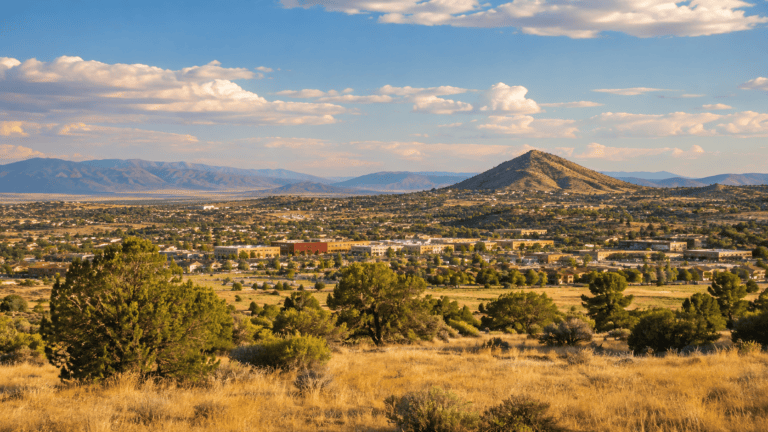
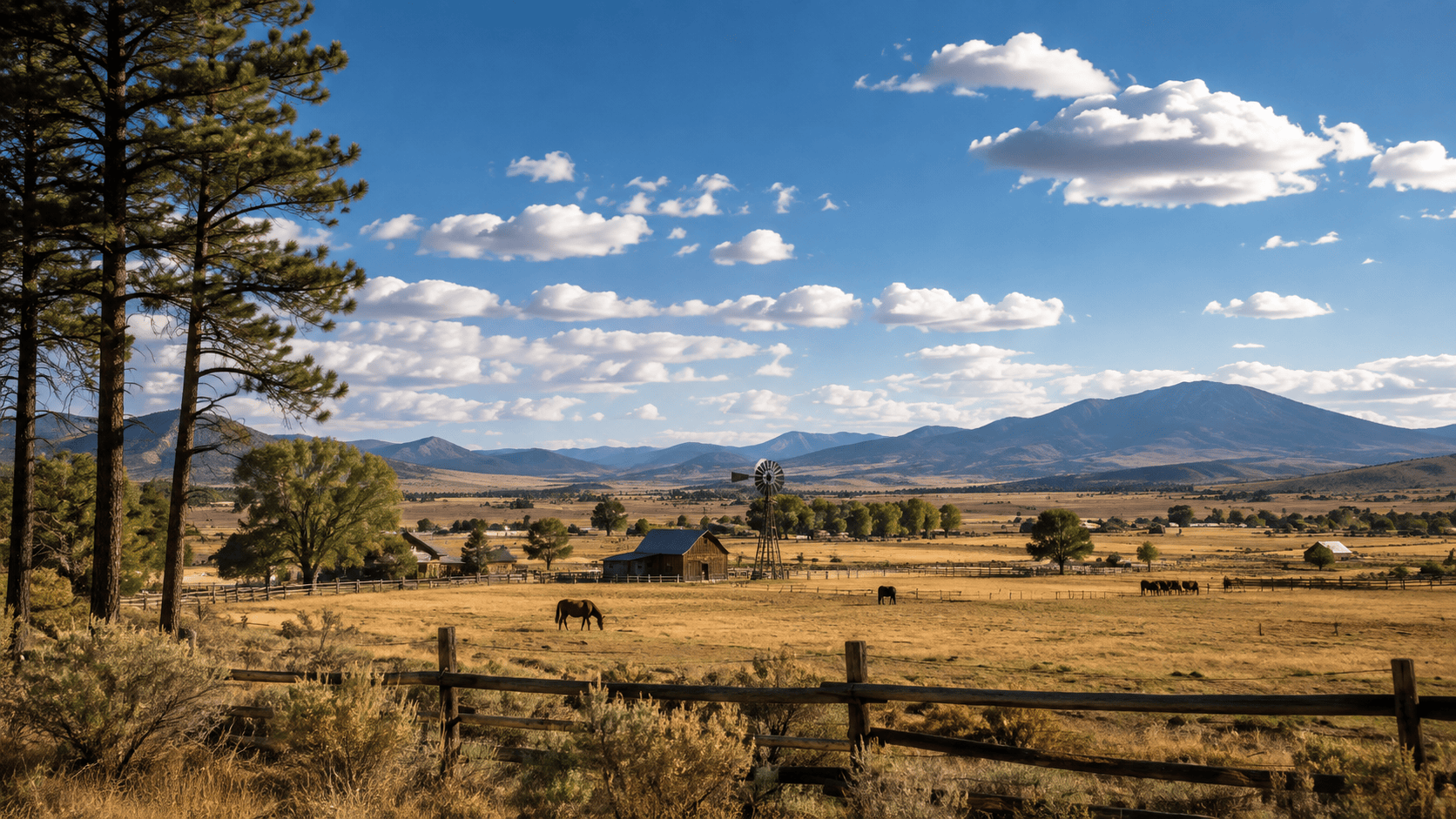
Chino Valley sits in the Central Highlands of Arizona, roughly ten to fifteen miles north of Prescott along Highway 89, about 130 miles north of Phoenix. As the name suggests, it fills a broad valley, so the landscape here is different from Prescott’s forested hills. Instead of ponderosa pines and granite, you get open grassland, big skies, and ranch land rolling out toward the horizon, with mountains framing the edges. That openness is the first thing you notice when you arrive, and it sets the tone for everything else about the town.
How it got its name
The town’s name comes straight from the land. In 1854, a U.S. Army officer named Lieutenant Amiel W. Whipple, the same Whipple who lent his name to Fort Whipple, passed through the area and took note of the curly grama grass growing across the valley in abundance. The Spanish word for that grass was chino, and the name stuck to the whole valley. So while plenty of Arizona towns are named for people or minerals, Chino Valley is named for the grass that fed the cattle that built it, which tells you almost everything about the place before you even arrive.
The first territorial capital
Here is the piece of history most people do not know. When President Lincoln’s appointed officials came west to organize the new Arizona Territory, they did not go straight to Prescott. Their advance military detachment set up a camp at Del Rio Springs, just north of present-day Chino Valley, in late December 1863, calling it Fort Whipple. Governor John Goodwin’s party arrived on January 22, 1864, and from then until May 18, 1864, the offices of the territorial government of Arizona ran out of tents and log cabins at Del Rio Springs. Only after those first months did the whole operation, government and fort alike, move south to Prescott, which became the first permanent capital. A state historical marker on Highway 89 still marks the spot. For the rest of that story, see our history of Prescott, but the founding chapter belongs to Chino Valley.
The headwaters of the Verde River
There is a reason the government chose Del Rio Springs, and it is the same reason people have always settled here: water. The name Del Rio means of the river, and these springs are a source of the waterway that would come to be called the Verde River, one of the most important rivers in Arizona. In a dry territory, reliable water, good grass, timber within a few miles, and abundant game made this a natural place to plant a capital. That same spring water still gives Chino Valley a local reputation for some of the best-tasting water around, and you will hear old-timers talk about filling jugs from it.
The people who came before
Long before any of that, the valley belonged to Native peoples, chiefly the Yavapai, who lived across this part of Arizona for generations and relied on the springs, the grasslands, and the river. Archaeological traces of that long history still turn up in the surrounding country. As with Prescott, the arrival of settlers and soldiers meant the displacement of the people who were already here, and an honest account of Chino Valley’s founding has to hold both truths at once: the valley was a beginning for the territory and an ending for the way of life that came before it.
Ranch and farm country
Once the capital moved on, Chino Valley found its real and lasting identity. Settlers homesteaded the land and began growing hay, corn, and wheat, and the Del Rio Springs area grew into one of the largest ranches in central Arizona. Army surgeon Dr. James Baker, who recognized the valley’s potential, partnered with James Campbell to establish the famous Verde Ranch, one of the biggest cattle and horse operations in the whole territory. That farming and ranching heritage never left. To this day, Chino Valley is defined by its working ranches, hay fields, and horse properties more than by any downtown, and that agricultural character is the heart of the town.
The railroad and the Fred Harvey farm
The next chapter came on the rails. In 1909, the Atchison, Topeka and Santa Fe Railroad, together with the Fred Harvey Company, bought the Del Rio Springs farm and put it to work supplying the Fred Harvey Houses strung along the Santa Fe line. Milk, eggs, meat, and produce raised in Chino Valley fed guests at famous railroad hotels like the El Tovar at the Grand Canyon and La Posada in Winslow. It was an early version of farm-to-table, decades before the phrase existed, and a few of the historic Fred Harvey buildings from the 1920s still stand on the land. The railroad also created Jerome Junction, a transfer point that became a hub of activity in the valley from around 1900 into the 1920s.
A future state park at Del Rio Springs
The story of Del Rio Springs is not just history. The roughly 1,000-acre Del Rio Springs Ranch, at the Verde River’s headwaters and the site of that first territorial capital, has been the focus of a preservation effort by the Trust for Public Land and local and county partners. The vision is to protect the land and water and turn it into a new state park, with outdoor recreation and historical interpretation telling the story of Arizona’s founding right where it happened. If it comes together, it would give Chino Valley a signature destination and finally put a proper spotlight on one of the most historically important spots in the state.
The character of the town today
Modern Chino Valley, incorporated in 1970 and home to somewhere around fourteen thousand people, has held onto its rural soul even as the wider region has grown. This is a quiet, slow-paced, family-oriented community where people keep horses, wave to their neighbors, and value elbow room over city conveniences. It does not try to be Prescott, and that is exactly its appeal. If Prescott is the historic downtown with the courthouse plaza and the crowds, Chino Valley is the open country just up the road where things move at a gentler pace.
A growing town that keeps its roots
Chino Valley is not frozen in time. As the whole Prescott region has grown, the valley has drawn new residents looking for space, quiet, and a more affordable place to put down roots, and you will see newer neighborhoods alongside the old ranches. The town has a campus of Yavapai College, which brings students and classes to the community, and the population has climbed steadily over the years. What is notable is how much of the town’s rural, agricultural character has survived that growth. Locals are protective of the open land and the horse-friendly, slow-paced way of life, so even as Chino Valley adds people, it works hard to stay the kind of place they moved there for in the first place.
Trails and the outdoors
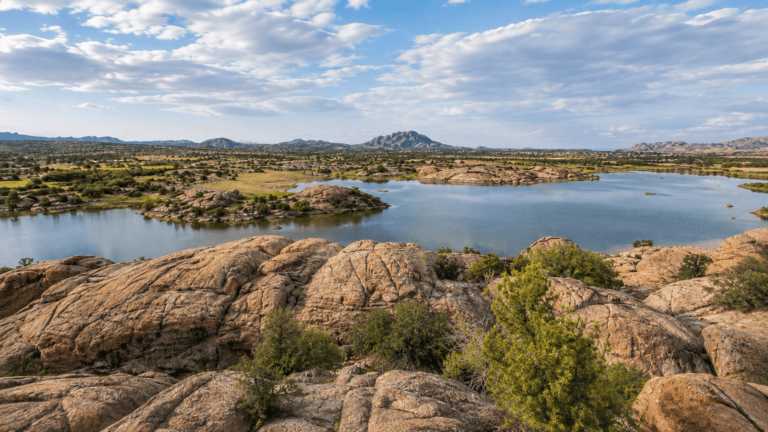
The open country around Chino Valley is a quiet draw for anyone who likes to be outside. The Peavine Trail, which starts down by Watson Lake in Prescott and runs through the Granite Dells, connects to the Iron King Trail and heads north toward the Prescott Valley and Chino Valley area, giving walkers and cyclists a long, flat rail-trail to explore. Beyond the maintained trails, the valley is laced with the kind of back roads, washes, and open range that reward slow exploring, and locals know swimming holes and quiet spots that never make it onto a map. Because Chino Valley sits so close to Prescott, you can easily combine a visit with the boulders and water of the Prescott lakes or the trails in our guide to beginner-friendly hikes in Prescott.
Horse country
If any single thing defines Chino Valley, it is horses. The flat, open land and the ranching tradition have made this one of the most horse-friendly communities in the region, full of equestrian properties, arenas, and boarding facilities. It is common to pass riders along the roads and to see arenas and pastures where other towns would have subdivisions. For anyone who rides, or who simply loves the sight of horses in an open field with mountains behind them, the valley is a genuine pleasure, and it is a big part of the western, ranch-country feel that sets the town apart from its neighbors.
Community events and local heritage
For a small town, Chino Valley keeps a warm community calendar. Events like Territorial Days and Pioneer Day celebrate the town’s founding families and frontier roots with the kind of old-fashioned, everyone-is-invited spirit that big cities have lost. A local farmers market brings out the valley’s growers, and the Chino Valley Historical Society preserves the town’s archives and photographs and keeps its founding stories alive. To plan a visit or check what is on, the Chino Valley Area Chamber of Commerce and its visitor center are a good first stop, and you can find them online at chinovalley.org.
Everyday life and where to eat
Chino Valley is not a place you come for a fancy night out, and that is part of the charm. It is a town of honest, unpretentious local spots, the kind of cafes where ranch families have breakfast and everyone seems to know each other. You will find down-to-earth diners, a few restaurants, and the local market rather than a row of trendy boutiques. Come hungry for a hearty breakfast, not a tasting menu, and take the slower pace as an invitation to relax. It is a refreshing change from the busier tourist towns, and it is exactly how the locals like it.
Antiques, feed stores, and small-town shopping
Shopping in Chino Valley matches the town’s personality. This is feed-store-and-hardware country more than boutique country, which is exactly why bargain hunters love it. Scattered along the main road you will find antique shops, thrift stores, and secondhand spots where you can dig for a deal, the kind of places that have long since been priced out of trendier towns. Add the practical businesses that keep a ranching community running, from tack and feed to farm supply, and you get a refreshingly honest main street. If your idea of fun is turning up an old treasure in a dusty antique mall rather than browsing a curated boutique, Chino Valley is a happy hunting ground.
Where Chino Valley fits with Prescott
Chino Valley is one of the four communities locals call the Quad Cities, alongside Prescott, Prescott Valley, and Dewey-Humboldt, all sharing this stretch of high country. It works best thought of as an easy extension of a Prescott trip rather than a separate destination. You can spend the morning on Whiskey Row or at Watson Lake and be out in Chino Valley’s ranch country within fifteen or twenty minutes, trading crowds for open space. For anyone trying to understand the whole region, Chino Valley is an essential piece, both the place where the territory began and the quiet agricultural anchor of the area today.
When to visit and getting there
Getting to Chino Valley is simple: it is a straight, short drive north from Prescott on Highway 89, and you will want a car, since the valley is spread out and rural. Like the rest of the region, it sits at high elevation, so it enjoys four real seasons, with warm days, cool evenings, and the occasional winter snow. Spring and fall are especially pleasant for exploring the open country, and any clear day rewards you with those big valley skies. There is no wrong time to make the short trip up from Prescott and see a different, older side of the region.
A quiet corner worth knowing
Chino Valley will never be the busiest stop in the area, and it does not want to be. Its value is in what it holds: the ground where Arizona’s government first took root, a ranching heritage that still shapes daily life, wide-open country, and a slower way of doing things that is getting rare. Understanding it makes you understand the whole region better. For more on the towns around Prescott and the history that connects them, browse our History and Heritage section and our things to do in Prescott guide, and join our free newsletter to keep up with the area.